“Genetic manipulation becomes arbitrary and unjust when it reduces life to an object, when it forgets that it is dealing with a human subject, capable of intelligence and freedom, worthy of respect whatever may be their limitations; or when it treats this person in terms of criteria not founded on the integral reality of the human person, at the risk of infringing upon his dignity. In this case, it exposes the individual to the caprice of others, thus depriving him of his autonomy.”
― Pope St. John Paul II, Address at the Conclusion of the Thirty-Fifth General Assembly of the World Medical Association
Scientists working for a small startup in San Francisco are pursuing something that bioethicists have been warning about for decades: creating genetically engineered children.
News of this dystopian venture comes to us courtesy of the Wall Street Journal (WSJ). In a recent feature [1], the WSJ shone a light on the effort being pursued by a company called Preventive, located in Silicon Valley, California.
Editing genes in human embryos is banned in the U.S. To get around this, Preventive is instead trying to find a location where they can carry out their “research” without falling into trouble with the law, such as the United Arab Emirates.
Ethical Lines in Genetic Engineering
According to the WSJ, the financiers behind the effort, including Coinbase co-founder and CEO, Brian Armstrong, have been toying with the idea of going about the work in secret. Preventive would only announce the birth of a “healthy genetically engineered child before the scientific and medical establishment had a chance to object—a leap meant to shock the world into acceptance.”
After the plans for secrecy were outed by the WSJ, Armstrong and others backing the company announced that Preventive had raised $30 million to test gene-editing technology. They denied the plans of secrecy.
While Preventive claimed to only be pursuing research to cure preventable diseases, experts are far from convinced that this is the case.
“These people are not working on genetic diseases,” Fyodor Urnov, a director at the Innovative Genomics Institute at the University of California, Berkeley, told the WSJ. “They are either lying, delusional, or both. These people armed with very poorly deployed sacks of cash are working on ‘baby improvement.’”
Earlier this year, Armstrong had posted [3] on Twitter that he envisioned the “IVF clinic of the future” as including gene-editing, which could help “accelerate evolution.” Such a clinic would also involve genetic testing of human embryos to “choose the embryo that best matches what you want, ideally from thousands or more,” as well as “artificial wombs.”
Moral vs. Immoral Gene-editing
No doubt many people will be taken in by Preventive’s claims to simply be working to rid the world of the scourge of heritable diseases. Such a person is not wholly wrong in the belief that gene therapies, in general, may hold promise as a positive advancement of technology (i.e., The Catholic Church supports research aimed at curing diseases and considers genetic intervention morally acceptable when it respects human dignity and does not involve the destruction of human embryos.). However, what Preventive is pursuing does not fall into this category. It is dystopian, even satanic.
The Vatican warned about the ethical implications of gene-editing technology in 2008, in the document Dignitas personae [4]. This document, published by the Dicastery for the Doctrine of the Faith (formerly called the Congregation for the Doctrine of the Faith) (CDF) is an update to the 1987 instruction Donum vitae [5], in which the CDF tackled some of the thorniest bioethical issues of the time.
Technology had raced ahead at lightning speed in the decades since the publication of Donum vitae. Hence Dignitas personae, which directly addresses the topic of gene-editing at some length.
Gene Therapy
In the document, the CDF differentiates between two forms of gene therapy: 1) Somatic cell gene therapy, and 2) Germ line cell therapy.
Somatic cell therapy is a form of therapy aimed at eliminating defects in cells other than reproductive cells. In this case, editing the genes can eliminate disease for a patient, but the edited genes are not passed on to the future children of the person whose genes have been edited. Such therapies can, in principle, be morally licit, said the CDF, while listing various conditions that would have to be met in order for such therapies to be acceptable.
Germ line therapy, on the other hand, presents much more challenging ethical issues. In this case, genes that are being edited can be passed on to future generations, with all the staggering implications that that entails, i.e. a scientist in a lab could permanently change the genetic code of generations of humans.
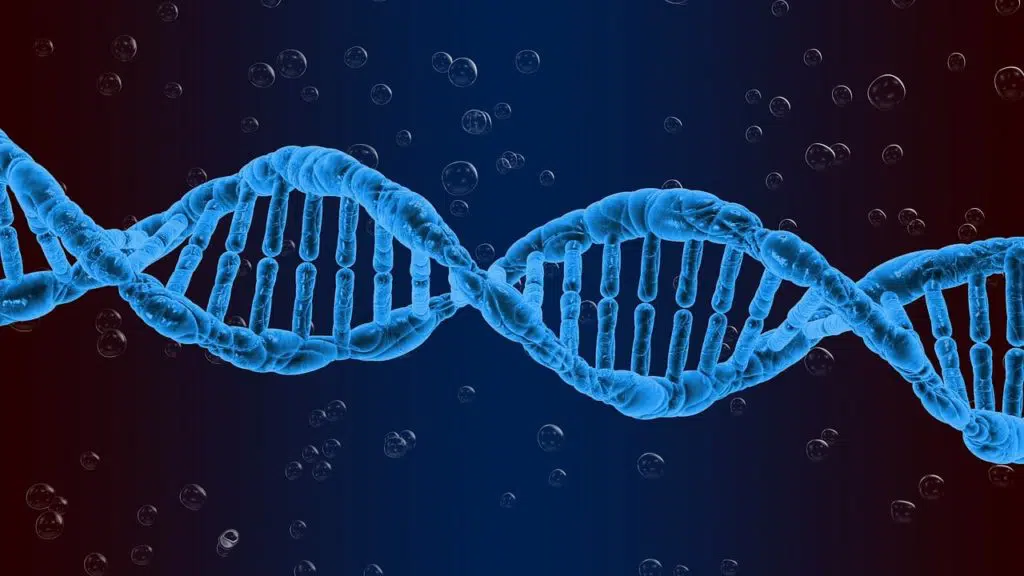
Even here, however, the Vatican does not rule out the liceity of the technology, in principle. The current problem, they note, is that germ line therapy carries far too many risks. “[B]ecause the risks connected to any genetic manipulation are considerable and as yet not fully controllable,” the CDF notes, “in the present state of research, it is not morally permissible to act in a way that may cause possible harm to the resulting progeny.”
In other words, it is at least theoretically possible that, should the technology develop to a degree where the risks are reduced so low that the benefits outweigh the risks, germ line therapy could be licit.
However, in no way does this apply to the kind of research being pursued by Preventive, i.e. involving gene-editing technologies being applied to human embryos to be used in in vitro fertilization. In other words, the scientists are creating human embryos, often in large quantities, and then editing them.
To bring a gene-edited human embryo to birth would involve selecting the most “desirable” embryos, implanting them in the womb of a surrogate, and then destroying the rest. “For these reasons,” concludes the CDF, “it must be stated that, in its current state, germ line cell therapy in all its forms is morally illicit.”
The Transhumanist Temptation
This conclusion is in keeping with the take that Pope St. John Paul II gave more than two decades earlier, in 1983, in the address quoted [6] at the beginning of this article. Of note, the sainted pope noted (as I so often repeat!) that our evaluations of emerging technologies must always take into account the fundamental “dignity of man.” Gene- editing technologies that destroy human embryos, or subject them to eugenic calculations about more or less desirable genetic qualities clearly fail this test, to put it mildly.
The identity of the founders of Preventive is highly illuminating. There is, as we have seen, Armstrong, with his visions of the “IVF clinic of the future,” which is a eugenicist’s fantasy. But also funding the venture are Open AI CEO, Sam Altman, and his same-sex partner.
Altman’s relationship is hardly inconsequential in terms of providing insight into his motivations for supporting this technology. Same-sex couples cannot, by nature, reproduce. However, it has become extremely common for male same-sex couples to contract with a “surrogate,” who carries a child conceived through in vitro fertilization using one of the couple’s sperm.
The whole process of IVF and surrogacy is by nature suffused with a disturbingly eugenic and consumerist ethos. Often, those seeking to have a child in this way will “shop around” for an ideal egg donor, in the hope of maximizing certain “desirable” traits in the child. However, mastering gene-editing would take this to a whole new level, enabling the creation of customized human embryos.
However, Altman’s interest in this technology is only part and parcel of his much broader program of revolutionary change. Altman must be placed among the ranks of a set of extremely powerful and wealthy entrepreneurs in Silicon Valley who are devotees of a philosophy called “transhumanism.”
Transhumanism is a philosophical and cultural movement that advocates using advanced technology to enhance and transform the human condition. Central to it is the belief that humans can – and should – use science and technology to transcend biological limitations such as aging, disease, and even mortality. A key aspect of transhumanist thought involves the merging of humans with machines, through brain-computer interfaces, artificial intelligence integration, or cybernetic enhancements.
In a blog post from 2017, titled “The Merge [7],” Altman mused when and how humans will begin to merge with machines. He suggested that this process of progressively merging with machines “probably cannot be stopped.”
In the post, Altman also hinted at what he thought the end game of gene-editing technologies would be. “Although the merge has already begun, it’s going to get a lot weirder,” he wrote. “We will be the first species ever to design our own descendants.”
Cardinal Sarah: God the Creator
Hidden behind all the grandiose rhetoric of transhumanists like Altman, is the presupposition the more power is always better, and that if humans can do something, they should.
In his powerful book The Day is Now Far Spent, Cardinal Robert Sarah tackles the issue of transhumanism head on. “The purpose [of transhumanism] is to surpass the limits of humanity and to create a superman,” he wrote. “This theoretical project is on the way to becoming a reality. We are reaching here the end of the process of self-rejection and of hatred of human nature that characterizes modern man.”
Against modern man’s disdain for limits, Cardinal Sarah preaches the crucial importance of – indeed the necessity of – healthy limits. Guided by transhumanism, man “runs the serious risk of disfiguring himself irremediably,” said the cardinal. “Faced with this prospect, any sensible person ought to tremble.”
“Here we are, alone, disarmed, and helpless, at the mercy of an ultimately nightmarish movement. We have transgressed all the limits. But we did not see that the limits were protecting us. Beyond the limit, there is nothing but the infinity of the void,” he wrote.

The solution to the transhumanist nightmare is to re-establish contact with our true nature, as given to us by the Creator. While it is true that we must exercise our creativity in reducing suffering and overcoming disease, it is ultimately a Promethean nightmare to seek to eradicate death or suffering altogether, at any cost. It is a fool’s errand, and, as he warned above, we will only debase or “disfigure” ourselves in the process.
For generations, human beings have learned how to find beauty and meaning within the limits of the human condition, in an understanding that we are creatures, called to intimacy with our Creator. Part of being a creature means embracing our creatureliness and offering up a prayer of thanksgiving to God for the gratuitous gift of our being.
Cardinal Sarah writes:
If we want to remain human, we must accept our creaturely nature and once again turn to the Creator. The world has chosen to organize itself without God, to live without God, to think about itself without God. It is in the process of making a terrible experiment: wherever God is not, hell is there. What is hell if not the privation of God? The transhumanist ideology illustrates this perfectly. Without God, nothing remains but what is not human, the post-human. More than ever the alternative is simple: God or nothing!
We can and must seek to develop promising technologies like gene-editing to the extent that they have legitimate, moral therapeutic uses. In this, we are simply exercising our capacity as co-creators with God, having been endowed by him with the gift of reason. However, reducing human beings to products, to be “designed” according to our necessarily painfully-shortsighted specifications, is a giant leap too far. It will create a hell on earth.
Governmental leaders and legislators must do everything in their power to prevent such Frankenstein experiments from taking place.