“Hear and let it penetrate your hearts, my dear little ones. Let nothing discourage you, nothing depress you; let nothing alter your heart or your countenance. Do not fear vexation, anxiety or pain. Am I not here, your Mother? Are you not in the folds of my mantle, in the crossing of my arms? Is there anything else that you need?”
― Our Lady of Guadalupe to St. Juan Diego
This week we celebrate two great Marian feasts, both of which hold immense significance for the pro-life movement. Today, of course, is the Solemnity of the Immaculate Conception. And on Friday, we will celebrate the feast day of Our Lady of Guadalupe.
In the life of the Blessed Virgin Mary, we see God revealing to us much of what the Church teaches us about the incomparable value of human life. The doctrine of Mary’s Immaculate Conception declares that Mary, at the first instant of her conception in the womb of her mother, was preserved from all stain of original sin (Catechism of the Catholic Church [1], nos. 490-493).
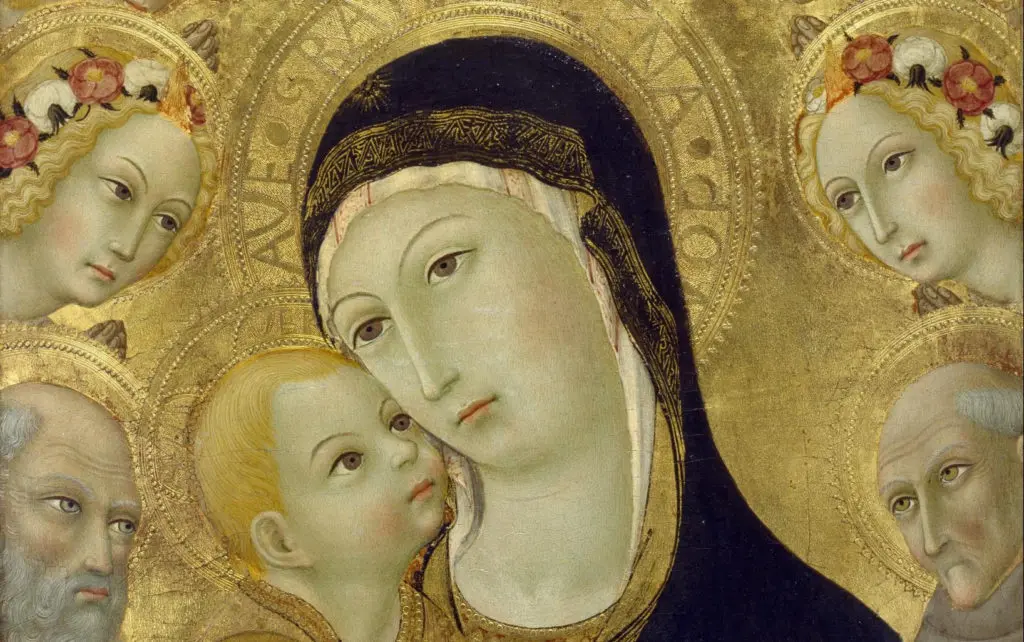
The fact that Mary was preserved free from the stain of original sin from the first instant of her conception underlines the reality that Mary was a human person from the first instant of her conception; not simply a mass of tissue, a pregnancy, or a fetus.
Proponents of the culture of death deem the human child in the womb a worthless blob waiting for value and meaning to be conferred upon him or her at some later time. This judgment is also applied to others deemed “less worthy” of human respect.
Our Lady’s Life Reminds Us of the Inherent Dignity of Every Person
In the life of the Blessed Virgin, however, we find two moments in particular that repudiate this anti-life narrative in the strongest possible terms. There is, of course, the moment when Mary visited her cousin Elizabeth, and the preborn St. John the Baptist leapt in Elizabeth’s womb. Thus, we see that a preborn child is the first person, other than Mary and St. Joseph, to recognize that Incarnate God.
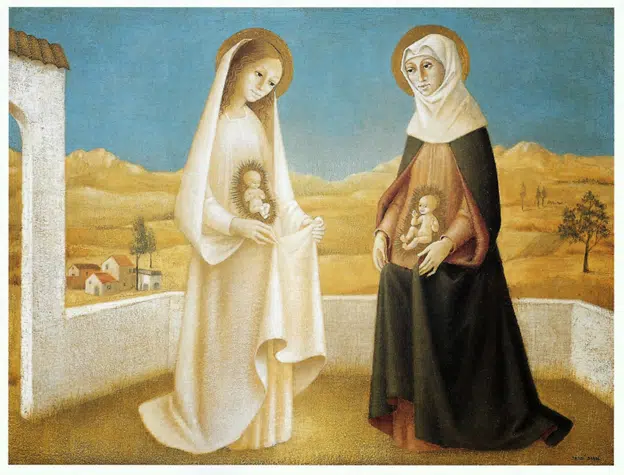
But long before Mary said her fiat to the Archangel Gabriel, becoming the Mother of God, she was endowed with special graces when she was immaculately conceived in the womb of her own mother, St. Anne.
It is jarring to think of the fact that, from a legal perspective, the preborn Mary, St. John the Baptist, and Jesus would not be protected in our own society. And yet, while Christ and Mary are each in categories of their own, as the Incarnate God and the only human conceived without original sin, every single preborn human child possesses intrinsic dignity and the fundamental right to life as they did.
Indeed, by highlighting the immense dignity that the Virgin Mary possessed from the moment of her conception, the Church draws all preborn human beings under the influence and protection of her mantle. Not all humans are conceived immaculately. But that a preborn child could be so conceived, preserved from the condition that affects all other humans, in order to render her fit to participate in a special way in the salvation of the whole human race, underscores the great worth of every human being, from the moment of conception.
Our Lady of Guadalupe: Patroness of the Preborn
While Our Blessed Mother has appeared to many people over the course of history, there is arguably no appearance which so powerfully speaks to the intrinsic dignity of human life as Our Lady of Guadalupe.
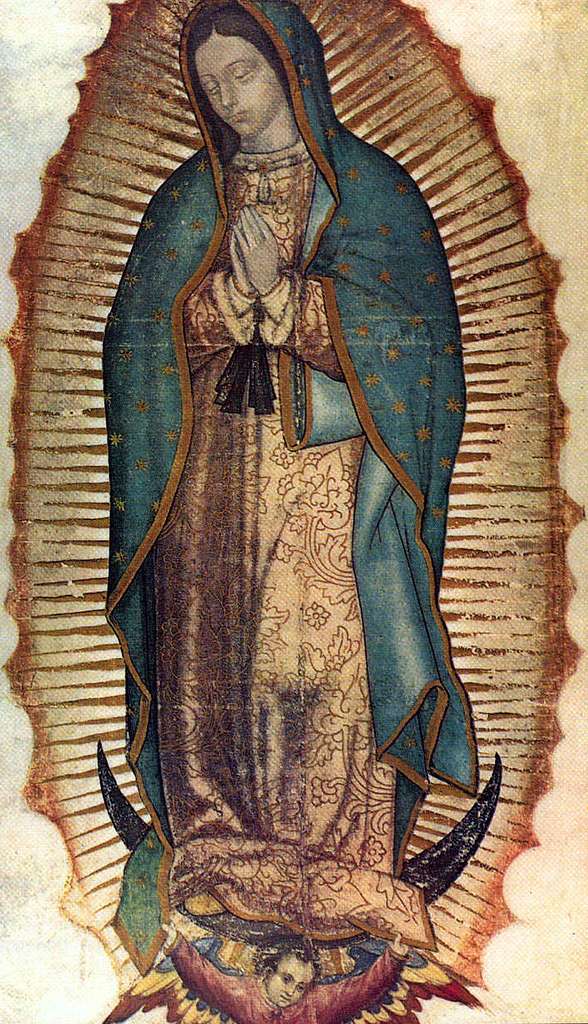
In the famous image miraculously imprinted on the tilma, Mary is depicted as pregnant with the Infant Jesus.
Our Lady came to the Aztec peoples, a society that was practicing human sacrifice on an industrial scale. But after she came and left her image, people’s values and worldview changed. Within eight years after her appearance, over eight million converted and received baptism. Their hearts were converted to the true God, and the practice of human sacrifice was abolished.
Under the maternal gaze of Our Lady, who loves every human being, including the weakest and most vulnerable, the Aztecs found they could no longer treat their fellow humans with such disdain. Inspired by an encounter with the unconditional love of the only perfect Mother in history, they turned away from a worldview suffused with despair.
The Aztec culture shifted from one of despair to one of hope, from a conviction that the gods were against them to a conviction that the true God, the only God, the Creator of all life loved them and cared so much for them that He became one of them.
This shift was so radical, and so complete, that the Latin American countries that are most devoted to Our Lady of Guadalupe, have been among those who have most strongly resisted the influence of the culture of death. Even still, many Latin American nations are fundamentally pro-life, protecting the lives of the preborn, and resisting the new movement towards assisted suicide and euthanasia.
The Culture of Death Feeds on Fear and Despair
For the Aztecs, as for many today, despair plays a key role in decision-making, leading to choices like contraception, abortion, euthanasia, etc.
While there are pro-abortion activists who are truly “pro”-abortion, in my experience it is rare that pregnant women seek out abortion because they truly believe that ending the life of their preborn child is a positive good. In the overwhelming majority of cases, they are operating from a place of fear, sometimes from complete despair.
Similarly, it is rare that elderly or otherwise sick individuals choose to end their lives through assisted suicide or euthanasia because they believe it is the “right” thing to do. Most often, it is because they are consumed by fear: fear of suffering, of the unknown, of being a burden to others, of not being able to afford healthcare that would allow them to live with dignity, fear of living with a disability and not receiving the support they require from family, friends or the broader community.
Even if there is a moral aversion toward such evil, their despair makes them feel they have no choice but to choose death. The culture of death feeds on this, which is exacerbated by the rejection of God and the moral law.
As Pope St. John Paul II wrote in Evangelium vitae [2], “there exists in contemporary culture a certain Promethean attitude which leads people to think that they can control life and death by taking the decisions about them into their own hands. What really happens in this case is that the individual is overcome and crushed by a death deprived of any prospect of meaning or hope” (no. 15).
Hope: The Supernatural Antidote
The important word in that sentence is “hope.”
Left to their own devices, humans find it difficult to live in hope. It is easy – far too easy – in our fallen world so filled with suffering, death, and malevolence, to lose sight of the realities of goodness, truth, and beauty.
A young woman facing an unplanned pregnancy or finding herself pregnant against her wishes, may feel that she cannot possibly carry the burden of a new human life. And in some ways, she is not wrong. The weight of motherhood is too much for any human to bear alone.
At the natural level, mothers are meant to be surrounded by the love and care of family and friends, and to be protected by the self-sacrificial love of the father of her child. In functioning communities, an unplanned pregnancy may cause distress but is not a source of despair.
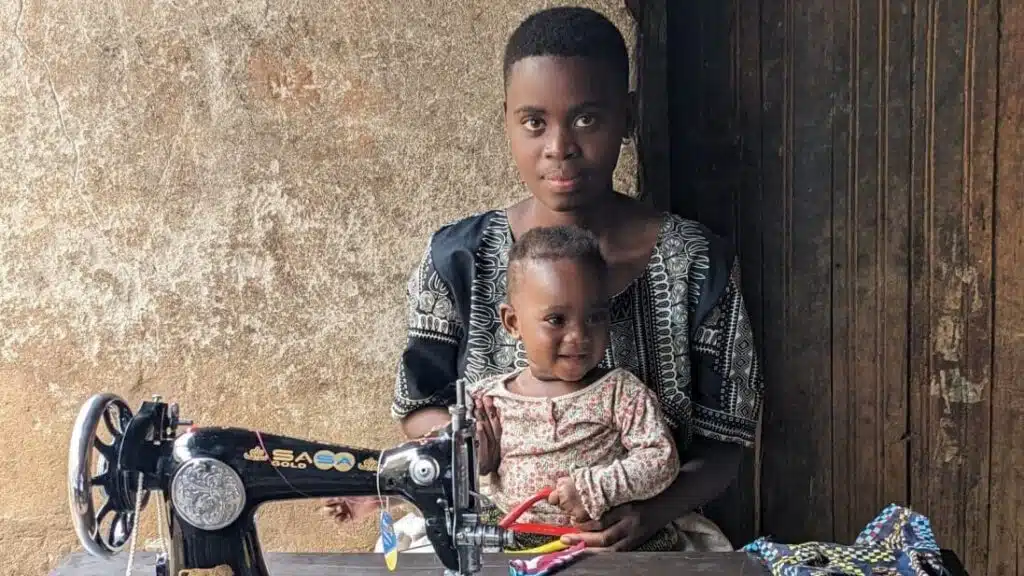
However, even the assistance of a loving community, spouse, or partner is not necessarily enough to keep at bay the forces of despair. Something more is needed: a supernatural perspective that recognizes that everything is a grace, including moments of great suffering.
“All things work to the good for those who love Him,” wrote St. Paul in Romans 8:28. Such an attitude in the face of suffering and persecution is beyond the natural capacity of the human person. It is a grace, given to those who humbly accept everything as coming from the hands of God, in trust that in the end all will be well.
Mary: A Model of Hope
No human being so perfectly lived in hope, and so perfectly models hope for us, as the Blessed Virgin Mary. Even in the face of the knowledge of the great suffering that she would face if she assented to the Archangel Gabriel’s request that she become the mother of Christ; she accepted the will of God.
What mother, knowing that her son would be killed in the most unspeakably brutal fashion, would nevertheless move forward in trust? Only a mother suffused with grace, operating from a supernatural perspective that trusts in the greater power of love, even when it seems as if evil is winning.
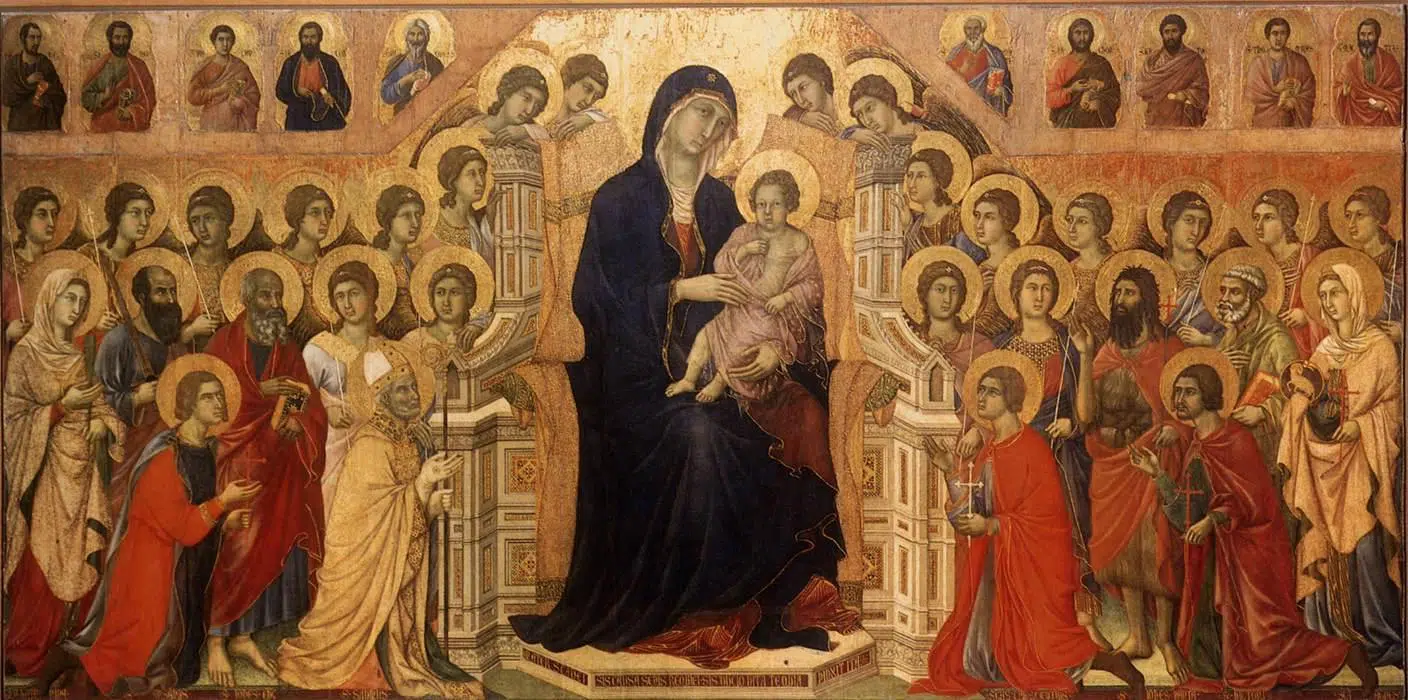
The Virgin Mary is the model of all mothers. Every mother is a kind of Mary. There is no motherhood without suffering. In many ways, to love is to suffer, because to love is to have one’s own happiness invested in the well-being of another, who will inevitably, to one degree or another, suffer. And yet, those who open their hearts up to such a love, will find that within such a love is found depths of meaning that are not available to those who close their hearts off in fear.
Pray to Our Blessed Mother for a Culture of Life
Sadly, today the assault on human life in Mexico (and across the Americas) has returned. Mexico, and several other South American nations, have turned their back on the message of Our Lady of Guadalupe. They have re-invited the bloody spirit of the Aztec religion back into their civilization.
No longer is the loving gaze of a mother, pregnant with her own child, the model on which they build society. Instead, they have given into fear, rejecting their own capacity to creatively respond to the challenges presented by new life, and taking the “easy” way out, legalizing the murder of the preborn.
The need to build a Culture of Life will take time and patience. We have and will continue to encounter resistance; nevertheless, we cannot abandon preborn children and their mothers. Laws may refuse to recognize the dignity and right to life of the child in the womb (or even at the end of life), but we cannot be indifferent to the reality.
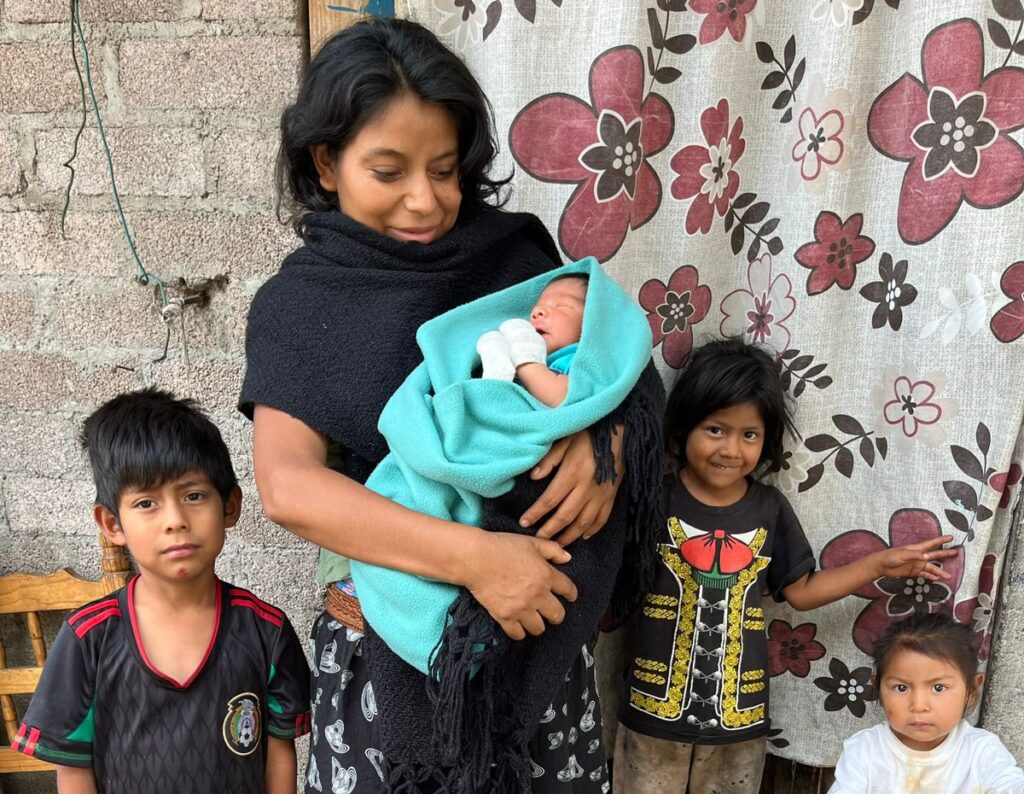
Just as it was Our Blessed Mother who inspired a radical cultural shift several hundred years ago in Latin America, it is by looking to Our Lady, who leads us to her Son, that we will once again be given the courage and grace to live in hope, and to spread the message of hope to others.
Our despairing society, which has turned its back on life in so many ways, needs to feel the love of a true mother: a mother who will never abandon us, and who modeled for us the almost infinite capacity of love to endure in the midst of hardship, and thus to impart the gift of life and salvation.
May these two feast days this week renew in our own hearts a love for our Blessed Mother, and lift our spirits with hope, even when things seem hopeless and beyond repair. If the murderous Aztecs could so quickly be converted to the Gospel of Life by our Blessed Mother’s visitation and message, our own society is certainly not beyond her reach.