“Freedom then is rooted in the truth about man, and it is ultimately directed towards communion.” ― Pope St. John Paul II, Veritatis Splendor [1]
On May 8, Päivi Räsänen, a Christian Finnish parliamentarian and former Minister of the Interior, announced that she will take her case to the European Court of Human Rights [2] in Strasbourg. This follows seven years of police investigations, two unanimous acquittals overturned by the state, and finally a 3-2 conviction by Finland’s Supreme Court this past March under a statute on “war crimes and crimes against humanity.”
Her offense? Authoring a 2004 pamphlet for her Lutheran congregation, titled Male and Female He Created Them, in which she set out the historic Christian view of marriage and sexuality.
As I noted in my April column [3] on the case, Räsänen’s case is not an isolated event. ADF International, the legal organization defending her, has now launched a Free Speech on Trial [4] campaign that documents case after case across Europe and the Americas of Christian parents and politicians being prosecuted for expressing what was uncontroversial moral teaching until extremely recently.
In Iceland, Monsignor Jakob Rolland faces a criminal investigation [5] for explaining Catholic teaching on a radio program. In Brazil, veterinary student Isadora Borges faces up to ten years in prison [6] for two social media posts stating basic biological facts. In Canada, a former British Columbia school trustee was recently hit [6] with a $750,000 fine by a so-called “Human Rights Tribunal” for opposing gender ideology in public schools.
The pattern is unmistakable and spreading. The state is being weaponized, country by country, to silence dissent from a particular vision of the human person.
St. Anselm, St. Aquinas, and the Catechism on Authentic Freedom
But there is a deeper question beneath all of this. It is the question that the prosecutors, the lawmakers, and the human rights tribunals all assume they have answered, even when they have not asked it.
The question is this: What is freedom?
For most people in the modern West, the answer seems obvious. Freedom is the absence of external constraint. Freedom is the ability to do what I want when I want, without interference. The more choices I have, the freer I am. The more anyone tells me I cannot do something, the less free I am.
The Catholic tradition offers a very different account of freedom: one that is older, deeper, and truer to reality than the contemporary alternative.
St. Anselm of Canterbury, writing in the eleventh century, famously defined freedom not as the power to choose anything at all, but rather as the power to choose the good. A person whose appetites and habits are so disordered that he cannot stop himself from drinking to excess, or pursuing sexual conquest, or hurting his family, is not “free” in any meaningful sense. He is enslaved by his own passions, regardless of how many options the law leaves open to him.
St. Thomas Aquinas developed this insight. In his commentary on Peter Lombard’s Sentences, he writes that freedom “is by its nature ordered to the good and tends to evil only by defect.” To choose evil, on this view, is not an exercise of freedom but a failure of it.
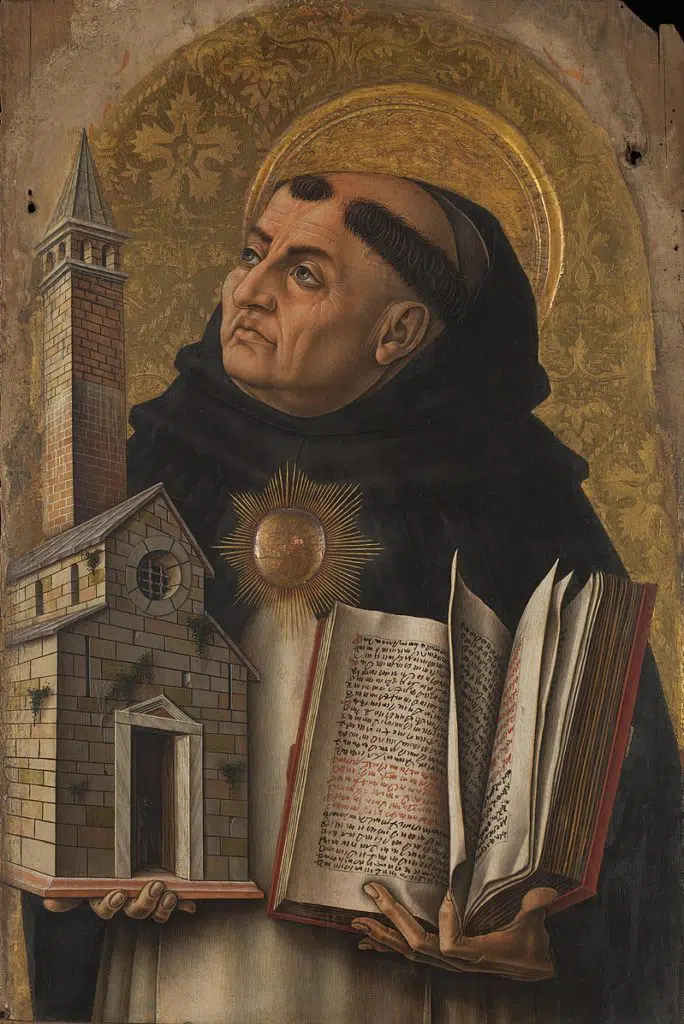
As St. Aquinas explains, the human will was made to seek the good. When it veers off into choosing evil, something has gone wrong, just as something has gone wrong when an eye cannot see or a leg cannot walk.
We do not speak of the “freedom” to be blind or to have cancer. Similarly, St. Aquinas would say, we should not speak of the “freedom” to choose evil. To choose evil is not to exercise one’s freedom, but rather to use one’s capacity to choose to enslave oneself.
The Catechism of the Catholic Church [7] carefully walks the balance in its treatment of the question of freedom. “Freedom is the power, rooted in reason and will, to act or not to act, to do this or that, and so to perform deliberate actions on one’s own responsibility,” explains the Catechism in paragraph 1731.
At first glance, this definition of freedom might seem to resemble the modern definition of freedom, i.e. as the capacity to do whatever one wants, whenever one wants, without interference. However, in the same paragraph the Catechism goes on to clarify that, “Human freedom is a force for growth and maturity in truth and goodness; it attains its perfection when directed toward God, our beatitude.”
And then, crucially, it adds this:
The more one does what is good, the freer one becomes. There is no true freedom except in the service of what is good and just. The choice to disobey and do evil is an abuse of freedom and leads to ‘the slavery of sin’ (no. 1733).
The Totalitarian Cult of Freedom
There is a deep paradox, or perhaps an outright contradiction, running through the modern worship of freedom for freedom’s sake.
If freedom is absolute, one might ask how jailing Räsänen for a twenty-year-old pamphlet defends “freedom.” If freedom is the ability of people to do what they want when they want, without interference, then surely that freedom also extends to Räsänen? She, too, should have the right to freedom without interference, shouldn’t she?
Similarly, surely Monsignor Rolland, British Columbia Trustee Neufeld, Brazilian student Borges, and all the numerous other Christians being persecuted and prosecuted for opposing transgenderism, speaking biological truths, praying in front of abortion facilities, and other now-forbidden behaviors, should also be free to do what they want.
The bitter irony, of course, is that under the regime of the new ideology of radical freedom, it turns out that some people’s freedoms are more acceptable than others.
George Orwell, writing in Animal Farm, famously satirized the cult of communism by explaining that within the communist system, “All animals are equal, but some animals are more equal than others.” Similarly, as it turns out, within the modern cult of freedom, all choices are equal, but some choices are more equal than others.
As in Animal Farm, the modern ideology of freedom has produced something that is often indistinguishable from a cult. Like a cult, the worshippers of freedom often are completely unaware to the self-contradictions within their system. Even as they hunt down heretics with pitchforks, they sincerely believe they are defending “freedom.”
The cult of the sexual revolution, which was built on the dogma of freedom for freedom’s sake, now has its own set of dogmas that cannot be questioned (e.g. gender is a construct; bodily autonomy is absolute; choice is sacred). It has its own sacraments (the abortion procedure, the surgical “transition,” the lethal injection). And it has its own list of heresies, and its own processes and inquisitions for hunting down and punishing heretics (online “lynch mobs,” “human rights” tribunals).
In other words, what is now defended in the name of an open-minded “freedom” is in fact a definite moral program with very particular content. And anyone who dissents from that content is treated not as a participant in legitimate moral debate, but as a heretic, to be silenced by police, prosecutors, and tribunals.
The Enslavement of ‘Freedom’
However, as St. Aquinas and St. Anslem would explain, the self-contradictions in the cult of freedom go even deeper than this.
Yes, there is something profoundly paradoxical in the fact that the worship of freedom for freedom’s sake has produced lynch mobs and human rights tribunals that hand down crippling fines. But, even more profoundly troubling is how the worship of freedom in the end enslaves the worshippers themselves.
Look around us. The fruits of the worship of “freedom” untethered from truth are everywhere:
Marriages collapse at unprecedented rates because we no longer believe that the marriage bond means anything beyond the present feelings of the spouses. Children are conceived and then destroyed in the womb because we have declared the human will to be sovereign over biological reality.
Adolescents are encouraged to mutilate their healthy bodies in pursuit of a “gender identity” that the most elementary anatomy and biology contradict. The elderly and disabled are being killed by their own physicians because “autonomy” demands it. Pornography, addiction, isolation, and despair proliferate in a culture that has lost the capacity to say that some choices are good and others are not.
Sin tricks us. It whispers that we are free when we follow our impulses. And then it captures the will and binds it to the very appetites that destroy us. As Pope St. John Paul II so wisely observed, “when the sense of God is lost, there is also a tendency to lose the sense of man” (Evangelium Vitae [8], no. 21).
The Limits of Freedom
Here is what makes the present moment interesting. Even institutions with no Catholic commitments, no interest in defending traditional morality, are beginning to admit, in their own language and in their own way, that “freedom to do whatever I want” not only has limits, but in fact tends towards cannibalizing the freedom of the vulnerable.
Here’s an interesting example of what I mean: on April 28, the Centre for Addiction and Mental Health (CAMH), Canada’s largest mental health teaching hospital, fully secular and fully embedded in the Canadian medical establishment, submitted a remarkable letter [9] to the federal government’s Special Joint Committee on Medical Assistance in Dying (MAiD). At issue was whether Canada should extend its MAiD regime to people whose sole underlying medical condition is mental illness.
CAMH strenuously opposed this expansion of MAiD.
After reviewing the research, CAMH reported that there is “no evidence to suggest it is possible to reliably distinguish” between a MAiD request from someone with mental illness and a suicidal impulse driven by that very illness. In CAMH’s own words, “any determination that a person has an irremediable mental illness for the purposes of MAiD would be inherently subjective and arbitrary.”
That is an extraordinary admission. The whole moral architecture of MAiD rests on the assumption that “autonomous choice” is the supreme value, and that the role of the doctor and the state is simply to honor whatever choice the patient makes. CAMH, with no Catholic “axe to grind,” is saying that in this domain at least, the autonomy framework collapses. The very condition required for an autonomous choice, i.e. a will not captured by pathology, is exactly what the medical profession cannot reliably verify.
In other words, CAMH has acknowledged that not every “choice” is a free one. A choice deformed by illness, which harms the person making the choice, is not the same as a choice made in clarity, and which supports the health and healing of the patient. Some “freedoms” are in fact bondages. There are limits.
But if this is true for mental illness, why would it not be true elsewhere?
Is it not the case that the choice deformed by addiction is not free? The choice captured by ideological enthusiasm is not free. The choice driven by despair is not free. Once we admit that some choices are unfree because they do not arise from a human will operating as it should, the question is no longer whether freedom has limits, but where those limits lie.
And answering that question requires us to do something the modern world is desperate to avoid: think honestly about what a human being is, and what fulfills him.
Aristotle on True Freedom
Twenty-four centuries ago, Aristotle taught that the human good, what he called eudaimonia and what is usually translated as “happiness” or “flourishing,” is not the satisfaction of whatever appetite happens to be strongest at the moment. It is the life lived in accord with virtue, the fulfillment of what a human being actually is.
The free man, on Aristotle’s account, is the man who has formed himself well enough that he wants what is genuinely good. The slave is not the man bound in chains. The slave is the man bound by his own disordered appetites.
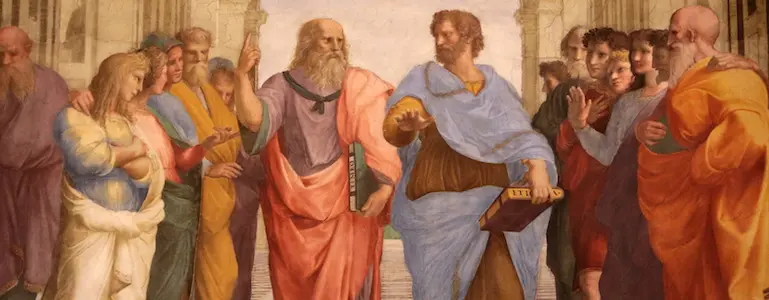
The Catholic tradition received this insight and deepened it. Grace and virtue liberate. Sin enslaves. But the basic point, that human freedom requires an objective account of human nature and human flourishing, is not a uniquely Catholic idea. This idea traces its origins back to the earliest records of human thought.
What the modern definition of freedom does is duck the hard work. It refuses to ask what a human being is, what fulfills him, what harms him. It pretends that those questions either have no answer or are nobody’s business. Then, having dispensed with the question, it claims that we are “free” so long as nobody else stands in our way. And then, paradoxically, in hunts down as heretics anyone who has a different idea of freedom.
This is not freedom. It is intellectual and spiritual laziness dressed up in the language of liberation. And as CAMH, Aristotle, St. Anselm, St. Aquinas, and the Catechism, in their very different ways all attest, sooner or later every honest inquiry runs into the same wall.
The wall is reality.