


Canada’s Euthanasia Regime: Efficiency and Death vs. True Compassion and Dignity
“Euthanasia is a false solution to the drama of suffering, a solution that is not worthy of man. The real answer cannot be, in fact, to give death, as ‘gentle’ as this may be, but to testify to the love that helps us to face pain and agony in a humane way.” ― Pope Benedict XVI, Angelus Address, February 1, 2009
On March 24, Jocelyn Downie, a leading activist for assisted suicide and euthanasia, and professor emerita at Dalhousie University, appeared before Canada’s Special Joint Committee on Medical Assistance in Dying.
There, she urged legislators to proceed with the planned 2027 expansion of so-called medical assistance in dying (MAiD) to individuals whose sole underlying medical condition is mental illness. If the Canadian government does not legalize euthanasia for the mentally ill, she said, the mentally ill will just kill themselves anyway. “What will happen, if there is an extension or an exclusion,” she told the committee, “is that people will die by suicide.”
Yes. That is really her argument: If we don’t help mentally ill people kill themselves, then…they will kill themselves. As Wesley J. Smith wryly observed at National Review: “Hey, here’s an absurd notion: How about trying to prevent these deaths instead of facilitating them? Crazy, right?”
As I have written before on the Canadian euthanasia regime, what we are watching is the collapse of the most basic distinction in medical ethics: the distinction between caring for a patient and killing him. And once you eradicate that, there seems to be no bottom to the depravities that will be justified in the name of “compassion.”
Three recent stories from Canada show how far the collapse has gone, and, by extension, how far it will go in other nations that embrace assisted suicide.
Canada’s Ever-Widening Net
When Canada legalized so-called medical assistance in dying in 2016, proponents promised Canadians the law would apply only to the narrowest set of hard cases. It would apply to adults with a terminal illness who were enduring unbearable suffering, and only occur with their explicit, repeated consent. And to alleviate concern about potential abuses Canadians were ensured that “strict safeguards” would be employed.
So much for that.
In 2021, Bill C-7 created so-called “Track 2”, i.e. assisted suicide and euthanasia for people whose death is not reasonably foreseeable. Adults with serious but non-terminal disabilities or chronic illnesses became eligible to be put to death by lethal injection. The only problem, of course, is that what constituted “serious” was left vague and in the hands of the doctors who were responsible for approving people for MAiD, many of whom seem to have a shockingly expansive view of what “serious” means.
The same bill scheduled a further extension to those whose sole medical condition is a mental illness. That was originally supposed to take place in 2023, then 2024, and now 2027. It is this March 2027 expansion Ms. Downie was defending on Parliament Hill.
The scale of what has already happened is staggering.
According to Health Canada’s Sixth Annual Report on Medical Assistance in Dying, published in November 2025, 16,499 Canadians were killed by a practitioner under the MAiD regime in 2024 alone. That brings the cumulative total, since legalization less than a decade ago, to 76,475 deaths in a country of 41 million.
MAiD now accounts for 5.1 percent of all Canadian deaths. In Quebec, the rate is higher still.
Every single prediction made by pro-life opponents of the law has been vindicated, and then some.
When “Suffering” Is Really Loneliness
The recent release of the Sixth Annual Report on MAiD in Canada points to the bleak reality underlying many of these so-called “dignified” deaths.
Among Track 2 MAiD recipients in 2024 are those whose death was not reasonably foreseeable. 44.7 percent cited “isolation or loneliness” as a source of their suffering. 50.3 percent cited “perceived burden on family, friends or caregivers.” 73.9 percent cited “loss of dignity.” 78.7 percent cited “loss of independence.”
These are not the complaints of people who are days from death. These are the complaints of people who have been told, in a hundred small ways, that there is no place for them in their families, their communities, their workplaces, their world.
In other words, the Canadian state is responding to epidemic loneliness and self-perceived burden with a lethal injection. It is answering the cry of “I feel like no one needs or wants me anymore” with the reply, “You’re right. We can help you with that.”
And now the activists insist the same “help” must be extended to those whose suffering is exclusively mental – depression, anxiety, PTSD, borderline personality disorder. Illnesses that, in the vast majority of cases, are treatable. Illnesses from which people recover.
A Majority Want to Force Their Doctor to Kill
On April 9, Research Co. released a poll showing that only 41 percent of Canadians think health care professionals should have the right to decline to provide MAiD services when they have a moral or faith-based objection. Forty-two percent say they should not. Seventeen percent are unsure.
In other words, a clear plurality of Canadians believes a nurse or physician who holds it wrong to kill their patient should nonetheless be legally obligated – directly or by effective referral – to participate in their killing.
The numbers are even starker still for other life issues. Only 38 percent of Canadians support conscience rights for doctors who object to participating in abortion. A majority of 57 percent say physicians should not be permitted to decline care on religious grounds to LGBTQ-identifying patients – a framing that, in the present medical climate, likely implicates participation in procedures such as mutilating “sex-change” surgeries.
This is what has become of a country once profoundly shaped by the conviction that conscience is sacred. The Canadian plurality’s position, if fully enshrined in law (and in certain provinces it already effectively is), would render Catholic hospitals, Catholic physicians, and every orthodox religious practitioner effectively unemployable in medicine.
As I wrote last month on the case of Grey Nuns Community Hospital in Edmonton, this is not a hypothetical situation. The state broadcaster is already framing Catholic hospitals as obstacles to compassionate care. Lawsuits are underway in British Columbia seeking to compel faith-based institutions to permit euthanasia on their premises. And individuals who speak out about such things as gender ideology are being hauled before so-called “Human Rights Tribunals,” and being forced to pay staggering fines.
Government Hiding MAiD Statistics
Meanwhile, in Ontario, where more than 20,000 people have been killed under the MAiD regime, the death certificate of a patient killed by lethal injection will not list MAiD as the cause of death.
Under the directive of the College of Physicians and Surgeons of Ontario, and the Ontario Solicitor General’s “Checklist for MAiD Providers,” the illness, disease, or disability that “led to the request” is to be recorded instead. There is to be no “reference to MAiD or the medications administered.”
In other words, if a 65-year-old woman dies at an Ontario hospital because a physician administers a lethal combination of drugs into her veins, her official cause of death will be listed as whatever chronic condition her MAiD assessor cited to justify her eligibility. The injection that actually killed her is not mentioned. The public record lies.
As Jonathon van Maren notes, those wanting to find out the truth have to go looking for data in “separate reporting to the Office of the Chief Coroner and Health Canada’s federal monitoring system.”
He asks:
But what of those in Canada who have been euthanized for partial blindness? For mental health struggles? Because they can’t access the care they need? Because of their disabilities? To claim that these Canadians died due to these conditions amounts to a cover-up, and an Official Lie.
And it is not only in Ontario. Health Canada’s Sixth Annual Report itself goes out of its way to argue that MAiD is not a “cause of death” under World Health Organization (WHO) standards. It explicitly instructs readers that “the number of MAiD provisions should not be compared to cause of death statistics in Canada in order to determine the prevalence … nor to rank MAiD as a cause of death.”
In other words: what’s happening isn’t actually happening. Look the other way.
True Compassion, False Compassion
The word “compassion” comes from the Latin cum patior, “to suffer with.” To be compassionate, literally, is to take the weight of another’s suffering onto your own shoulders.
The Good Samaritan (Lk 10:25-37) bandaged the wounds of the man left by the side of the road, carried him to an inn, and paid out of his own pocket for his care. He did not dispatch him as an act of mercy. He suffered with him. This is the authentic Christian understanding, and what the Church has taught from the earliest centuries.
In Evangelium vitae, Pope St. John Paul II wrote of euthanasia:
Even if it is not motivated by a selfish refusal to be burdened with the life of someone who is suffering, euthanasia must be called a false mercy, and indeed a disturbing ‘perversion’ of mercy. True ‘compassion’ leads to sharing another’s pain; it does not kill the person whose suffering we cannot bear. Moreover, the act of euthanasia appears all the more perverse if it is carried out by those, like relatives, who are supposed to treat a family member with patience and love, or by those, such as doctors, who by virtue of their specific profession are supposed to care for the sick person even in the most painful terminal stages (no. 66).
The sainted pope then issued one of the three most solemn declarations in the entire encyclical, invoking, in communion with the bishops of the whole Church, the authority of the ordinary and universal Magisterium:
In harmony with the Magisterium of my Predecessors and in communion with the Bishops of the Catholic Church, I confirm that euthanasia is a grave violation of the Law of God, since it is the deliberate and morally unacceptable killing of a human person (no. 65).
The Catechism of the Catholic Church is equally direct: “Whatever its motives and means, direct euthanasia consists in putting an end to the lives of handicapped, sick, or dying persons. It is morally unacceptable” (no. 2277). Indeed, “intentional euthanasia, whatever its forms or motives, is murder. It is gravely contrary to the dignity of the human person” (no. 2324).

In other words, the choice facing Canada is between a false, cruel “compassion,” and a true compassion. The true form is difficult, expensive, and patient. It walks with the sick, the elderly, and the despairing and refuses to abandon them. It invests in palliative care, in psychiatric treatment, in community, in friendship. The false form is swift, bureaucratically tidy, and cheap. It replaces the labor of presence with the simplicity of a lethal injection.
A Shepherd Speaks
Fortunately, the Catholic Church in Canada is speaking up powerfully against this perversion of compassion.
Bill C-218, introduced last year by Conservative MP Tamara Jansen, would end the planned 2027 expansion. Jansen has called it what it is: “not healthcare, that’s not compassion, it’s abandonment.”
On April 20, just a few days ago, Cardinal Frank Leo of Toronto wrote directly to Prime Minister Mark Carney, to Justice Minister Sean Fraser, and to every MP in the Archdiocese of Toronto, urging them to support Bill C-218 and prevent the 2027 expansion. He wrote:
I ask you to choose life and not death; to help build a civilization that cares for those suffering and does not eliminate them, but instead surrounds them with dignity, compassion and love.
The Cardinal also called on the Prime Minister to permit Liberal MPs a free conscience vote on the bill and urged the government to redirect its energies toward genuine investments in palliative care, mental health support, and care for the marginalized, particularly seniors and Canadians living with disabilities.
His letter is part of the Archdiocese of Toronto’s Help Not Harm campaign. By mid-April, some 5,000 letters had been sent through the campaign’s portal to MPs.
The Canadian Conference of Catholic Bishops, under Bishop William McGrattan, issued its own strong statement supporting Bill C-218 back on February 5.
“As Christians, our response to persons living with mental illness should be modelled after the powerful witness of the Good Samaritan (Luke 10:25-37),” they wrote, “who, rather than abandoning his neighbour in need, responded personally with charity, compassion, care, and self-sacrifice, acting as a bearer of God’s love and as a sign of hope.”
I am proud of our spiritual leaders for speaking up against this planned moral abomination.
Care, Not Death
The struggle over Canada’s MAiD regime is little more than a battle for the soul of medicine and for the soul of our civilization. It is a battle over the most fundamental question a society can ask of itself: what do we owe our weakest members?
The pro-euthanasia movement’s answer is that we owe them a swift and efficient death. The Christian answer, which is also the answer of reason rightly exercised, is that we owe them love, company, care, and the patience to walk with them through their darkest hours.
Let us pray for the mentally ill Canadians whom Ms. Downie would have the state kill “compassionately.” Let us pray for Canadian physicians and nurses whose consciences are being ground down by a legal regime that treats their convictions as obstacles to progress. Let us pray for Cardinal Leo and all those speaking the truth at real personal cost.
And let us pray for our own nations, that we may yet resist the seductive lie that killing is compassion, and instead recover the difficult, costly, and infinitely more beautiful compassion of the Lord who bore our pain to the Cross.
“We can be certain of this,” Pope Benedict XVI reminded us on that Sunday in February 2009: “no tear, neither of those who suffer, nor of those close to them, will be lost before God.”
Human Life International
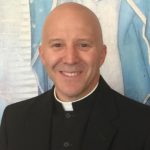
As president of Human Life International, Fr. Boquet is a leading expert on the international pro-life and family movement, having journeyed to nearly 90 countries on pro-life missions over the last decade. Father Boquet works with pro-life and family leaders in 116 counties that partner with HLI to proclaim and advance the Gospel of Life. Read his full bio here.
I would like to donate but can only do bank transfer owing to my visa being scammed 18 months ago and $2000. Being stolen from it.