

The Geneva Guillotine: The UPR, the Troikas, and the Defense of Sovereignty
If you want to see how modern imperialism operates in real time, do not look at battlefields. Look at Geneva.
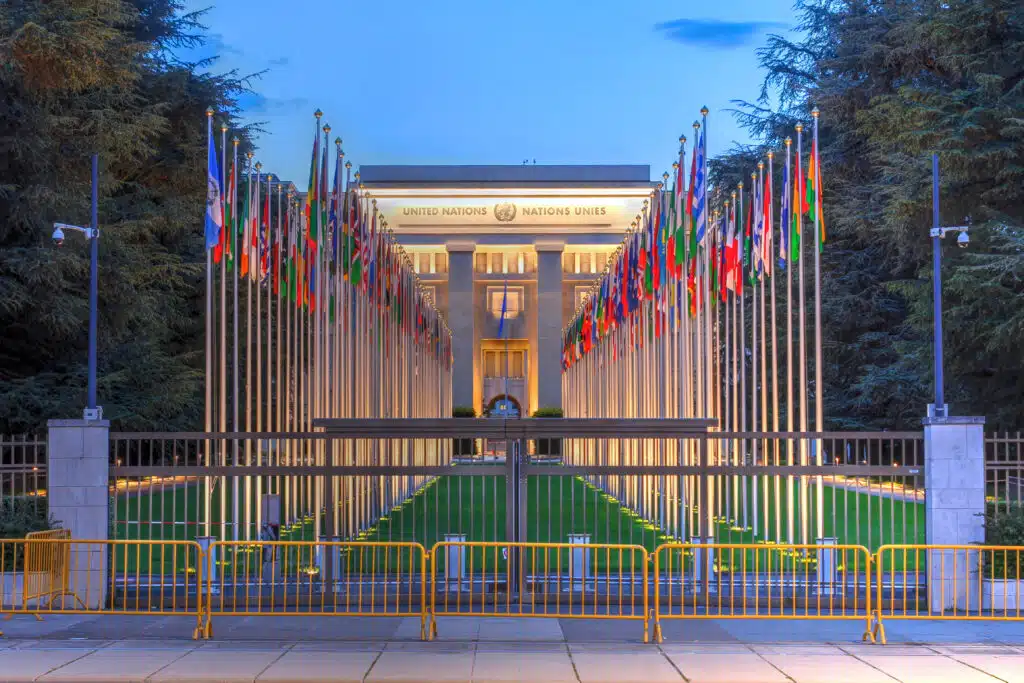
From November 2 to 13, the UN Human Rights Council opens the 53rd Session of its Universal Periodic Review (UPR). In theory, this forum was designed for countries to mutually evaluate their human rights records in a spirit of cooperation. In practice, it is an ideological firing squad.
The mechanism is lethal by design. The country under scrutiny is evaluated by a group of three nations, called a “troika”. The powers of the Global North use this funnel to launch poisoned “recommendations.” They demand the decriminalization of abortion, the establishment of comprehensive sexuality education from childhood, or the rewriting of a country’s constitution to fit their definition of family. If the cornered nation yields and accepts the recommendation, that verbal concession becomes a binding international mandate that local courts will use to strike down its sovereign laws. If it refuses, it faces stigma and the threat of cuts in economic aid.
Imagine the burden. In this 53rd Session, countries like the United Republic of Tanzania, Eswatini, and Trinidad and Tobago will be under the microscope. For hours, their ambassadors will have to listen to a score of European delegations accusing them of violating human rights simply for protecting life from conception.
The psychological pressure is crushing. Those who break in that room rarely do so out of conviction; they do it out of exhaustion and because they feel completely isolated in the face of the international community.
That is why Human Life International will be operating in the halls of the Palais des Nations this November. And we do not arrive with the airs of saviors, but as tactical allies. We know that diplomats from the Global South have plenty of courage; our job is simply to put the tools to exercise it at their disposal.
Our work is surgical. We know, for example, that Tanzania will face fierce pressure from Ecuador and other actors in its troika. What we do is meet with an allied delegation —the only pro-life voice in that drafting group— to hand them legal memos (one-pagers) that allow them to be the retaining wall. We replicate the same tactic with another certain strategic country to defend Trinidad and Tobago against the onslaught from the Netherlands. And the same goes for other “troikas.”
We provide them with the exact arguments to reject these impositions without violating international law. We prove to them, paper in hand, that there is no universal treaty enshrining abortion as a right, disarming the lie in real time.
But our greatest contribution is not a piece of paper; it is breaking the isolation. When a diplomat feels the technical backing of a global network, their posture changes. They stand firm. They reject colonization. The 53rd UPR Session will be a minefield, but we are ready to walk alongside these brave nations, ensuring that none of them negotiates away human dignity in exchange for a diplomatic round of applause.
Human Life International
Director of Intergovernmental Organizations and Diplomatic Missions
Human Life International
Luis Martínez is a Catholic lawyer, husband, and father of one daughter on earth and two children in Heaven, with nearly 30 years dedicated to promoting and defending human rights and the dignity of the person in both local and international arenas. Since 2014, Luis has been an active volunteer with Human Life International. In 2021, he was appointed as HLI’s first Director for the Mission to the Organization of American States (OAS), and in 2023, he assumed leadership of the newly established Directorate of Intergovernmental Organizations and Diplomatic Missions (IODM). From this position, he coordinates pro-life diplomatic engagement in multilateral organizations across continents, fostering collaboration in forums such as the OAS, the UN, the Summit of the Americas, ECLAC, and OACPS, among other regional and international bodies.
Why are Fewer Teens Identifying as LGBT?