


Assault on Religious Freedom: The Truth About Freedom

“Religious freedom is not merely a legal right or a privilege granted to us by governments; it is a foundational condition that makes authentic reconciliation possible…It is therefore a cornerstone of any just society, for it safeguards the moral space in which conscience may be formed and exercised.” ― Pope Leo XIV
On Thursday, March 26, Finland’s Supreme Court convicted Päivi Räsänen – a sitting member of parliament and former Minister of the Interior – of criminal “hate speech” for a pamphlet she wrote for her church more than twenty years ago.
The pamphlet, titled Male and Female He Created Them, affirmed the biblical understanding of marriage and sexuality. For that, Räsänen now has a criminal record, has been fined €1,800, and the pamphlet has been ordered to be destroyed.
“An Outrageous Example of State Censorship”
The Court found Räsänen guilty of having “made available to the public and kept available to the public opinions that insult homosexuals as a group on the basis of their sexual orientation.”
Bizarrely, while Finland’s Supreme Court ultimately found Räsänen guilty, it also noted that her pamphlet was in fact quite mild in content. “[I]t must be taken into account that the text forming the basis for the conviction did not contain incitement to violence or comparable threat-like fomenting of hatred,” the Court noted. “The conduct is therefore not particularly serious in terms of the nature of the offense.”
“Not particularly serious.” But worth giving a sitting parliamentarian a criminal record for.
Over at First Things, Robert Clark notes the absurdity of this decision:
A European democracy has ordered the destruction of text from a church pamphlet written over twenty years ago, under a provision of the criminal code that did not even exist in its current form when the pamphlet was first published.
After the decision, Räsänen expressed her intention to keep fighting. “I am shocked and profoundly disappointed that the Court has failed to recognize my basic human right to freedom of expression,” she said after the verdict. “I stand by the teachings of my Christian faith, and will continue to defend my and every person’s right to share their convictions in the public square.”
Räsänen indicated that she is considering an appeal to the European Court of Human Rights. “A positive ruling would help to prevent other innocent people from experiencing the same ordeal for simply sharing their beliefs,” she stated.
Paul Coleman, executive director of ADF International, which coordinated Räsänen’s defense, called the conviction “an outrageous example of state censorship.”
Indeed. Seven years of prosecution. Two acquittals overturned. A criminal record for quoting the Bible.
If this can happen in Finland, it can happen anywhere.
Canada Removes the Shield
In fact, just days ago Canada took a huge step in the same direction as Finland. On Wednesday, March 25 – one day before Räsänen’s conviction – Canada’s House of Commons passed Bill C-9, the so-called “Combatting Hate Act,” by a vote of 186 to 137. The bill now moves to the Senate.
What makes Bill C-9 so dangerous is not its stated purpose – who would oppose combating hatred? – but what was quietly inserted at committee: the removal of the longstanding “good faith” religious speech defense from Section 319(3)(b) of the Criminal Code.
The good faith provision currently states that no person shall be convicted of a hate speech offense “if, in good faith, the person expressed or attempted to establish by an argument an opinion on a religious subject or an opinion based on a belief in a religious text.”
That defense has been in the Criminal Code for decades. It exists as a constitutional safeguard – a signal that Canada recognizes the difference between religious teaching and criminal hatred. However, the Liberal government has now voted to eliminate it.
The Canadian Conference of Catholic Bishops has warned that removing this protection could place legitimate religious teaching and pastoral ministry at risk. “We believe it is possible to achieve the shared objective of promoting a society free from genuine hatred while also upholding the constitutional rights of millions of Canadians who draw moral and spiritual guidance from their faith traditions,” noted the bishops.
They are not alone. Muslim, Jewish, Sikh, Latter-day Saint, and Evangelical organizations have all raised the alarm.
In an analysis of the bill, religious freedom lawyer Barry Bussey notes that “Canadians are being asked to trust that a vague and sweeping expansion of state power over speech will be used wisely and sparingly.” He added, “History – both recent and distant – shows this is a dangerous gamble. When governments gain the power to police expression, the first casualty is not hate, but dissent.”
Bussey argues that the vague assurances of proponents of the bill that the law will not be misused fall flat:
Supporters repeat the familiar refrain that ‘law-abiding Canadians have nothing to fear.’ That claim has never aged well. Legislators’ intentions are not frozen in law. Statutes are interpreted years later by regulators, tribunals, prosecutors, and courts operating under very different political conditions – and often in ways the drafters never imagined.
Indeed. The removal of the religious speech defense does not necessarily mean that pastors will be arrested tomorrow. It means that the legal architecture that would have prevented such arrests has been deliberately dismantled. And we can expect bad actors to begin finding ways to exploit this situation, pushing the needle towards precisely the sort of situation we just witnessed in Finland.
This is hardly scare-mongering. After all, it was only a few weeks ago that a former school trustee in British Columbia, Canada, was handed down a devastating $750K fine for “hate speech” by a so-called “Human Rights Tribunal” for opposing efforts to impose transgenderism on schools in his province. This is already happening in Canada and has been happening for years. What Bill C-9 would add to the situation is the possibility of criminal sanctions.
The EU Mandates Gender Ideology
Meanwhile, across the pond, on March 12, the Court of Justice of the European Union (CJEU) issued a landmark ruling in the case known as Shipova, ordering all EU member states to provide legal gender recognition procedures for citizens who claim a gender identity different from their biological sex.
The ruling effectively overrides the domestic laws of countries such as Bulgaria, Hungary, and Slovakia, which define sex on biological grounds.
The case involved a Bulgarian national (a biological male) who moved to Italy, underwent a social and medical “transition” to a woman and then demanded that Bulgaria amend its civil registry to reflect a new gender and name. Bulgarian courts refused for nearly a decade, citing national law. The CJEU overruled them, holding that EU free movement law requires member states to amend official documents to match a citizen’s declared gender identity.
The implications are enormous. The CJEU has effectively established that gender self-identification is a right enforceable across the entire European Union, regardless of the democratic will of individual member states. Nations that reject gender ideology on moral, religious, or scientific grounds have been told that their objections are legally irrelevant.
A Worrying Pattern
Step back and look at what has happened in a single month. In Finland, a parliamentarian has been convicted of a crime for articulating biblical teaching on sexuality. In Canada, the legal shield protecting religious speech from prosecution has been voted away. In the EU, member states have been ordered to implement gender ideology over the objections of their own courts and citizens.
In each case, the State claims to be advancing tolerance, equality, or human rights. In each case, the practical effect is the same: the space in which religious believers can live and speak according to their convictions is being systematically narrowed. What was protected yesterday is prosecuted today. What is permitted today may be criminal tomorrow.
Bussey’s observation about Canada applies across the board:
When citizens cannot discern where the legal line lies, they retreat. Teachers avoid sensitive topics. Parents censor conversations at home. Faith leaders soften or abandon moral teachings. Professionals stop speaking publicly. This ‘chilling effect’ is not hypothetical – it is already happening, and it is one of the most corrosive forces in any democracy.
One Small Victory
Against this grim backdrop, a small but significant victory deserves mention. On March 4, a Maltese court acquitted Matthew Grech, a Christian singer who had been prosecuted under Malta’s “conversion therapy” ban for publicly sharing his testimony of leaving a homosexual lifestyle after his conversion to Christianity. The judge rebuked the activists who had reported Grech to the police, writing that the law does not exist “solely for the protection of only one segment of our society, namely all those persons who identify as LGBTIQ.”
Grech had faced five months in prison for describing his own experience. After seventeen court hearings over three years, he was acquitted. One judge, in one country, applied the law with basic fairness and common sense. It should not be remarkable that a man can share his own story without going to prison. The fact that it is remarkable should alarm all people of good will, and not just religious believers.
What the Church Has Always Taught
The Second Vatican Council’s declaration Dignitatis humanae remains the definitive Catholic statement on religious liberty. In it the Council fathers wrote:
The human person has a right to religious freedom. This freedom means that all men are to be immune from coercion on the part of individuals or of social groups and of any human power, in such wise that no one is to be forced to act in a manner contrary to his own beliefs, whether privately or publicly, whether alone or in association with others, within due limits (no. 2).
Note what the Council did not say. It did not say that religious freedom is a privilege granted by the State. It did not say that religious freedom extends only to private worship. It did not say that religious convictions must yield whenever they conflict with a prevailing cultural consensus. It said that the right to religious freedom is rooted in the dignity of the human person – and that it applies “whether privately or publicly, whether alone or in association with others.”
This is precisely what is under attack. In Finland, public religious expression has been criminalized. In Canada, the legal framework that protected it is being dismantled. In the EU, the moral and religious convictions of entire nations are being overridden by judicial decree. The right to believe is being reduced to the right to believe quietly – and soon, perhaps, not even that.
A Time for Courage, Not Retreat
The temptation in moments like this is despair. If speaking costs this much, perhaps it is wiser to say nothing.
As Robert Clarke writes in First Things:
Even after two unanimous acquittals, the state kept pursuing Räsänen. The uncertainty this creates, the chilling effect on ordinary citizens who might think twice before expressing their beliefs, the sheer weight of the process itself: these are costs that fall on everyone, not just the victims. Only structural reform can address it. Hate speech laws do not need better judges or clearer guidelines. They need to be taken off the books.
However, even in the face of such unjust laws, silence is not an option for those who follow Christ. “Woe to me if I do not preach the Gospel,” wrote St. Paul (1 Cor 9:16). Päivi Räsänen understood this when she chose to endure seven years of prosecution rather than recant.
The Catholic Church has survived every empire that has tried to silence Her. It will survive this one too. But that survival has never been passive. It has always required believers willing to speak the truth at personal cost – and it has always required the faithful to stand together.
On this Easter Monday, let us derive the courage to speak up for the truth by remembering the promise that sustains every generation of believers in every age of persecution: “In the world you will have tribulation. But take heart; I have overcome the world” (Jn 16:33).
Human Life International
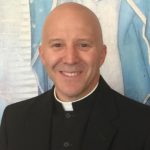
As president of Human Life International, Fr. Boquet is a leading expert on the international pro-life and family movement, having journeyed to nearly 90 countries on pro-life missions over the last decade. Father Boquet works with pro-life and family leaders in 116 counties that partner with HLI to proclaim and advance the Gospel of Life. Read his full bio here.


After 20 years? This is ridiculous. What about others who organise hate marches and the like, why are they not also picked up on what they are saying? It seems the church is always being penalised for something or another or abusive comments made against the church, it is because Christians are more tolerant and do not instigate hate as others do and for that people are punished, probably because they are afraid to address the less tolerant.