
Scotland Rejects Euthanasia Bill: A Victory for the Vulnerable
“[Through a] common witness to the God-given dignity of every person, without exception, and to the tender Christ-like accompaniment of the seriously ill, all in society will be encouraged to defend rather than undermine a civilization founded on authentic love and genuine compassion.” ― Pope Leo IV, Day of Life 2025
In an astonishing turn of events, on March 17, the Scottish Parliament voted 69 to 57 to reject the Assisted Dying for Terminally Ill Adults Bill. The bill would have legalized euthanasia and assisted suicide in Scotland.
The rejection of the bill came as a shock to many (including me!). When the bill passed its first reading last May, it carried easily 70 to 56. But it appears that the closer Members of the Scottish Parliament (MSP) looked at the bill, the less they liked what they saw.
By the time of the final vote, the leaders of all three of Scotland’s major parties opposed the bill. Twelve MSPs who had voted yes at stage one changed their votes to no.
Scotland is one of the most left-leaning legislatures in the United Kingdom. More than 70 percent of its seats are held by center-left or left-wing parties. The fact that the Scottish Parliament rejected euthanasia and assisted suicide provides powerful evidence of the shifting political landscape.
So resounding was the bill’s defeat that its sponsor, Liberal Democrat Liam McArthur, has said that he will not bother reintroducing the bill. It’s dead.
By all accounts, the debate over the bill was emotional. One MSP, Jeremy Balfour, who was born with no left arm and a right arm that ends at the elbow, rose to ask his colleagues to imagine hearing the words: “I would rather die than live like you.” What, he asked, does a state-sanctioned assisted dying regime communicate to disabled people about the value of their lives?
Another MSP, Pam Duncan-Glancy, who uses a wheelchair, urged her colleagues to “choose to make it easier to live than to die.” The word that recurred throughout the four hours of debate was not “dignity” or “compassion” – the preferred vocabulary of the bill’s supporters. It was “coercion.”
And over and over, MSPs cited Canada.
Canada: A Cautionary Tale in Six Figures
Canada is about to become the first nation in the modern era to record 100,000 state-facilitated deaths through its Medical Assistance in Dying (MAiD) program.
The Euthanasia Prevention Coalition estimates the country will cross that threshold by mid-to-late April, roughly a decade after euthanasia was first legalized in June 2016. In 2024 alone, Canada recorded 16,499 MAID deaths – roughly 45 per day, accounting for 5.1 percent of all deaths nationwide.
What began as a “narrowly defined” option for the terminally ill has expanded, step by step, into something almost unrecognizable. Eligibility was extended in 2021 to cover non-terminal chronic illnesses and disabilities. Same-day and next-day euthanasia approvals have become routine in some Canadian provinces. And Canada is now preparing to extend MAiD eligibility to those whose sole underlying condition is a mental illness.
The human stories behind these statistics are harrowing. For example, Roger Foley, a disabled Canadian living with an incurable brain disease, has reported that hospital staff repeatedly pushed MAiD on him. Cases have emerged of people suffering from depression, poverty, and housing insecurity being assessed for and approved to receive death. A 26-year-old man with seasonal depression was reportedly approved and euthanized.
There are signs of pushback even within Canada. On March 18, Alberta Premier Danielle Smith introduced Bill 18, the Safeguards for Last Resort Termination of Life Act – the first provincial legislation in Canada to push back against MAiD expansion.
The bill would restrict eligibility to patients whose natural death is reasonably foreseeable, ban MAiD for minors and for those whose sole condition is mental illness, and – most tellingly – prohibit doctors from raising MAiD with patients unless the patient brings it up first. That such a prohibition needs to be written into law is itself a measure of how normalized the offering of death has become in Canadian medicine.
Even the United Nations has recoiled. The UN Committee on the Rights of Persons with Disabilities has called for repeal of “Track 2” MAiD – the pathway for those not facing imminent death – describing it as rooted in “negative, ableist perceptions of the quality and value of the life of persons with disabilities.”
The Bottomlessness of Pro-Euthanasia “Compassion”
A recent piece in The Atlantic by journalist Charles Lane offers a portrait of the horrors that ensue when the logic of euthanasia is followed through to its ultimate conclusion. It centers on Dr. Menno Oosterhoff, a retired Dutch psychiatrist who performed euthanasia on 12 psychiatric patients in 13 months – including at least two minors, the first in any country ever lawfully euthanized for mental illness.
His most famous case was Milou Verhoof, a 17-year-old girl who had been raped at age 13 and subsequently suffered from post-traumatic stress, depression, and self-harm. She had been failed repeatedly by the Dutch mental health system. Her family found Oosterhoff through his media advocacy campaign. On October 2, 2023, he administered a lethal injection to her in her childhood bedroom, while her parents looked on. She had chosen an evening gown and high heels to wear in her coffin. “Girl, have a good trip,” Oosterhoff told her. “You’ve been through so much.”
Lane’s article does not portray Oosterhoff as a monster, but as something more unsettling: a man who has convinced himself, through layers of philosophical rationalization, that killing a teenager for mental illness is an act of compassion. He coined the phrase “mentally terminal” – a concept with, as critics note, no grounding in psychiatric science. Incredibly, every oversight committee that reviewed his cases found no fault. The system “worked” exactly as designed.
In 2024, 30 people under age 30 were euthanized for psychiatric reasons in The Netherlands. During the same five-year period that psychiatric euthanasia spiked to new heights, suicide rates among Dutch young people also hit 21st-century records. In other words, at the very moment when The Netherlands is attempting to combat a spike in suicide amongst its youth, its government-funded healthcare system is actively killing the same youth that other branches of government are trying to save. How perverse!
The story of Lisa Tiersma offers an astonishing contrast between the pro-death enthusiasm of the likes of Oosterhoff, and what is possible when the sick and suffering are treated with authentic compassion.
Tiersma is a 27-year-old Dutch woman, who was treated for ten different psychiatric diagnoses as an adolescent, including a two-year hospitalization. She attempted suicide. She felt her treatments were going nowhere. What kept her going, she told Lane, was a dream of studying music.
Today, Tiersma teaches piano and performs her own compositions. Her song “Help Me,” written under the stage name Left Lynx, won a prize at the 2022 European Songwriting Awards. Last year, her psychiatrist asked her what she thought about euthanasia. Tiersma told Lane that it felt like the psychiatrist was “planting a seed, but it’s not the right kind of seed.”
She is alive because someone kept hoping on her behalf, even when she had stopped hoping for herself. That’s what healthcare is supposed to provide the sick and suffering: hope, dignity, compassion…help. Not death.
But once euthanasia is legalized, all bets are off.
“Narrow” Euthanasia is a Fantasy
Proponents of assisted dying legislation invariably insist that their proposal is narrowly drawn, carefully safeguarded, and nothing like Canada. Give us the narrow bill, they say, and trust us not to expand it.
Well, Canada was initially given the “narrow” bill. So was Belgium. So was The Netherlands.
In every jurisdiction where assisted dying has been legalized, the scope has expanded. The pattern is too consistent to dismiss as coincidence. It is the internal logic of the system asserting itself: once the state accepts that some lives are not worth living, it becomes progressively harder to say where that principle stops.
Now, even liberal advocates of MAiD are waking up to this undeniable reality.
Kathleen Stock is a secular, liberal feminist philosopher – not a religious conservative or pro-life campaigner. Her new book, Do Not Go Gentle: The Case Against Assisted Death, argues that the language of “freedom,” “autonomy,” and “control” used to promote assisted dying functions as a euphemism that obscures what legalization actually does: it changes how an entire society views the vulnerable, the disabled, and the elderly. Once death becomes a medical service, she argues, the consequences are structural and corrosive, not merely individual.
Encouragingly, The Guardian – one of Britain’s most prominent left-leaning newspapers – reviewed the book favorably. That a liberal philosopher can publish a book-length case against euthanasia and receive a sympathetic hearing in The Guardian suggests the intellectual ground is shifting in ways that cut across the usual political lines.
Scottish Bishops welcome Vote
In the wake of the Scottish vote, the nation’s bishops congratulated Scottish lawmakers. “MSPs can be confident that they have taken the correct and responsible course of action,” said Bishop John Keenan, president of the Bishops’ Conference of Scotland. “Their vote serves to protect some of Scotland’s most vulnerable individuals from the risk of being pressured into a premature death.”
“Every human life possesses inherent value,” added the bishop. “Genuine compassion is not expressed through ending a life, but through accompanying those who suffer and ensuring they receive the medical, emotional, and spiritual support that recognises their dignity. No life is without worth.”
The bishop noted that the next priority for the nation, “must be to strengthen palliative care by ensuring that it is properly funded and accessible to all who require it.”
Here, the bishop is echoing the long-standing teaching of the Church, expressed with great lucidity in the Declaration on Euthanasia produced by the Congregation for the Doctrine of the Faith (CDF) in 1980.
What is striking about the Declaration is not only its moral firmness and prophetic insight, but its pastoral acuity. It anticipates precisely the dynamic at work in Canada and The Netherlands cases – the way genuine suffering can be exploited to justify killing – and it names what is actually happening when a suffering person asks to die:
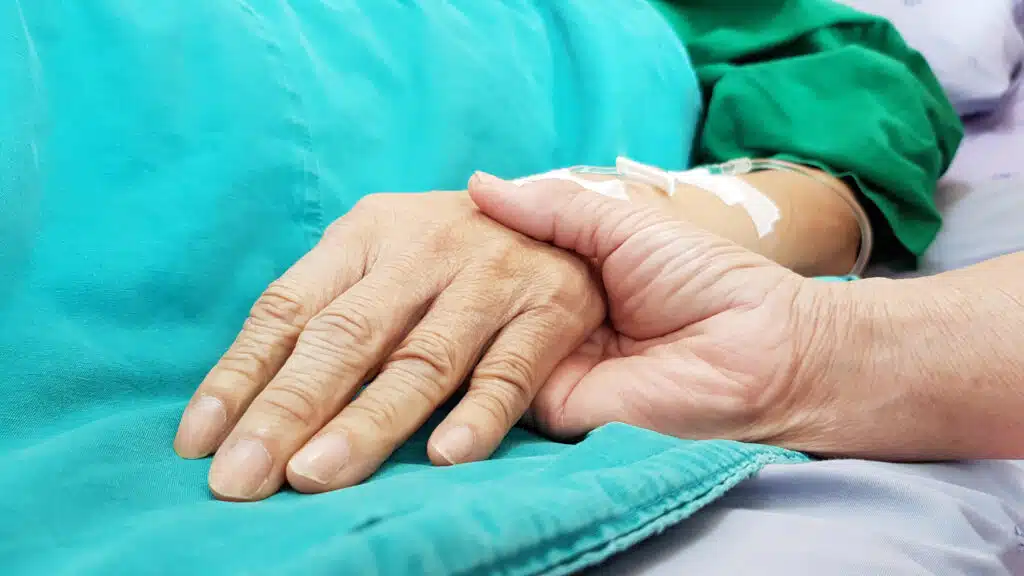
The pleas of gravely ill people who sometimes ask for death are not to be understood as implying a true desire for euthanasia; in fact, it is almost always a case of an anguished plea for help and love. What a sick person needs, besides medical care, is love, the human and supernatural warmth with which the sick person can and ought to be surrounded by all those close to him or her, parents and children, doctors and nurses.
In the face of suffering like this, the solution is not death, but authentic compassion that seeks to alleviate suffering, and to accompany the suffering. As Bishop Keenan suggests, why not strengthen palliative care, rather than kill?
Times, They are a-Changin‘
The defeat of Scotland’s bill amounts to genuine momentum for the Culture of Life. Scotland has said no. Wales said no. Alberta is pushing back within Canada itself. Even the UN is calling on Canada to pull back.
The horrors in Canada happened incrementally, one expansion at a time, each step normalized by the one before it. The lesson of Scotland is that the headlong rush down the slippery slope can be stopped – but only if legislators are honest and look the brutal reality of state-sanctioned murder in the face.
May other parliaments follow Scotland’s example. And may the Church continue to proclaim what it has always proclaimed: that no human life, however diminished in the eyes of the world, is without value – from the first moment of conception to the last breath of natural death.
Human Life International

HLI staff writers bring you stories from the mission field and the latest information on life and family issues. All HLI articles are true to Catholic teaching.
As president of Human Life International, Fr. Boquet is a leading expert on the international pro-life and family movement, having journeyed to nearly 90 countries on pro-life missions over the last decade. Father Boquet works with pro-life and family leaders in 116 counties that partner with HLI to proclaim and advance the Gospel of Life. Read his full bio here.
Whay does the Church say about death penalty? Historically the Church has approved death penalty for heinous crimes.
I don’t know why but I have such anger towards people who are against euthanasia but support abortion. I’d rather let innocent babies live but I won’t care if a liberal leftist wants to die, I’d let that idiot die.
Thank God! A sign of hope that the human race isn’t spiraling into the depths of depravity and callousness from which there’d be no return! We need more encouraging news like this!
What a superb and well laid out and organized column! So many people don’t know about the fact that this diabolical procedure is gaining ground and becoming “normalized” to the point that many in the medical field are accepting this as a “medical treatment” for what ails people. It’s nothing of the kind and Father is right. Between this and abortion, the medical field is often viewed with suspicion and fear. So sad.