
Remaining Profoundly Human in the AI Era
“In the era of artificial intelligence, when human dignity is threatened by new forms of dehumanization, ours is the pressing duty to remain profoundly human.”
― Pope Leo XIV, Magnifica Humanitas (no. 15)
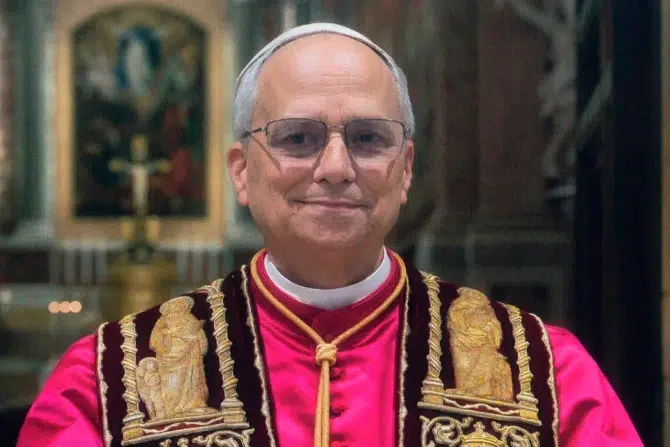
On May 25, Pope Leo XIV released his first encyclical, Magnifica Humanitas – “the magnificence of humanity” – entering directly into the debate about one of the most difficult and urgent questions of our age: what artificial intelligence is doing to the human person and society.
The Holy Father signed it on May 15, the 135th anniversary of Leo XIII’s Rerum Novarum, the document that gave shape to the Church’s social teaching amid the upheavals of the Industrial Revolution. This was no accident. As the first Leo brought the Gospel to bear on the machine age, this Leo brings it to bear on the age of the “thinking” machine.
Those looking for big tabloid-friendly bombshell headlines (e.g., “Pope Leo XIV condemns artificial intelligence as Satanic!”) will be disappointed. The encyclical is measured, and nuanced. It neither condemns artificial intelligence nor blesses it. Pope Leo refuses both the panic and the hype, instead bringing the deep wisdom of the Church’s teachings to one of the most fraught and complex issues of our time.
The Holy Father’s thesis is both simpler and more demanding: he reminds us that technology must be ordered to the dignity of the human person, and any technology that instead reduces the person to a thing – a profile, a defect, a problem to be solved –has betrayed its purpose, however technically impressive it may be.
Although the question of artificial intelligence might seem to be peripheral to the issues we deal with here at HLI, the document’s focus on human dignity makes it essential reading for pro-life and pro-family activists. The threats it names are not foreign to us. They are the very threats we have spent decades resisting, now wearing new and more sophisticated clothing.
Indeed, the whole appalling trajectory of the 20th century, from the communist to the sexual revolution, could be described not unfairly as the triumph of materialist technocracy: i.e., the reduction of the human person to a “machine” to be modified and exploited according to extrinsic principles and measures in pursuit of an immanent earthly paradise – a paradise defined by the transhumanist technocrats who are precisely the last people who should be trusted with such an enterprise, and who are very much at the center of the AI revolution.
Babel vs. Jerusalem
Pope Leo XIV begins by clearing away a common, comfortable lie, i.e. the idea that a tool is just a tool, blameless in itself, with everything depending on how we happen to use it.
There is a half-truth there, and he grants it. “In the abstract,” he writes, technology “is not a solution to humanity’s problems, just as it is not inherently evil.” But then comes the correction: “In practice, however, technology is never neutral, because it takes on the characteristics of those who devise, finance, regulate and use it” (no. 9).
Here it’s impossible not to recall Marshall McCluhan’s famous adage that “the medium is the message.” In other words, every technology has a hidden internal logic that shapes its uses and users in often subtle and hidden ways, and which is often quietly guided by a small number of technocrats who devise and control the technologies.
We now know this is true from a purely neurological, physiological level. No matter how “edifying” a television show might be, for instance, we know there is an inherent passivity in how people watch TV, which changes how they interact with the world.
Similarly, social media and the smartphone are inherently biased towards certain modes of interaction and behaviors, with a tendency towards addiction. This can be more or less significant: but it is always present, and it shapes the human person and the broader culture in ways that are impossible to measure, but which in the aggregate are epoch-altering.
The Holy Father casts the choice before us in two biblical images he returns to throughout. On the one hand, there is the Tower of Babel, raised by men who wished to make a name for themselves and to reach heaven without God, a project that ends in confusion and dispersion. And there are the walls of Jerusalem, rebuilt under Nehemiah by ordinary people, each given his own stretch of wall, a labor that ends in a restored community.
In other words, the question is never simply whether we can build a thing. It is what, and for whom we are building it.
“[T]he primary choice is not between a ‘yes’ or ‘no’ to technology,” writes the Holy Father, “but rather between constructing Babel or rebuilding Jerusalem; between a power that claims to dominate the heavens and a people who work together in the presence of God to rebuild the walls of fraternal coexistence” (no. 9).
The Technocratic Lie
The Holy Father warns that the technocratic mentality now surrounding us threatens to “normalize an anti-human vision,” one in which the fullness of life is reduced to “having more, reducing weakness, eliminating uncertainty and exerting total control.”
“When efficiency becomes the ultimate measure of value,” he writes, “human beings are tempted to see themselves as a project to be optimized rather than as persons called to relationship and communion” (no. 112).
Pope Leo traces this idea to a particular ideology, i.e., the notion “that suggests that every person must earn or justify his or her own worth, to the point of attributing greater value to those who are more efficient or effective” (no. 51). Where that idea takes hold, he says, persons are “reduced to a means of achieving results, a resource to be used and exploited.”
At HLI we have spent our entire apostolate confronting this most diabolic of lies. This is precisely the lie that says the child diagnosed with an illness in the womb is worth less because he or she will not be efficient. It says the patient who can no longer produce is a burden the rest of us should not have to bear. It whispers to the elderly that they have become a cost rather than a gift.
Strip away the digital vocabulary and you find the oldest error of the culture of death, the conviction that a human life must justify itself by its usefulness. Although AI need not inherently further this insidious lie, the tendency in that direction is strong, and already being witnessed at every level of society.
Why the Weak Reveal Our Humanity
As Pope Leo puts it, in the modern world, “Everything that appears as a ‘limit’ – incapacity, illness, old age, suffering, vulnerability – tends to be seen primarily as a defect to be corrected, rather than as a reality through which our humanity matures and opens itself to relationship” (no. 118).
Against all of it, the Holy Father plants a single sentence: “Humanity flourishes not despite limitations, but often through them” (no. 118).
The mysterious truth is that we do not typically learn to love at the height of our powers. We learn it at the cradle of a newborn who can do nothing for us, at the bedside of the sick, beside the bent frame of an aging parent whose needs are now wholly in our hands.
Even more mysterious, we learn (or can lean) to love often when we are at our weakest: when we are bed-ridden, or suffering from mental illness or addiction, or impoverished, and have nothing to give. It is then that we must have the humility to receive, without giving in to the temptation to resentment. We can love, then, by receiving with grace and acceptance and forgiveness.
“But He said to me,” wrote St. Paul, “‘My grace is sufficient for you, for my power is made perfect in weakness.’ Therefore, I will boast all the more gladly of my weaknesses, so that the power of Christ may rest upon me” (2 Cor 12:9). Such is the mystery of the cross, that most ancient “technology” of salvation that has little place in the worldview of the transhumanists who are guiding our AI revolution.
Or, as Pope Leo puts it, “Finitude, when truly accepted, does not diminish us but opens us to recognizing the face of God and others. Indeed, precisely because we experience limits — vulnerability, suffering and failure — we can recognize the inviolable dignity of every person, both our own and that of others” (no. 122).
What the Machine Cannot Do
No machine, however powerful, can stand in for a human, notes Pope Leo, because the machine cannot do the things that make us human to begin with.
Whatever else AI machines are, they “do not undergo experiences, do not possess a body, do not feel joy or pain, do not mature through relationships and do not know from within what love, work, friendship or responsibility mean” (no. 99).
One of the most pressing dangers of AI is how it is capable of imitating these most-human traits, in a way that is both convincing, and dehumanizing:
The artificial imitation of positive human communication — words of advice, empathy, friendship and even love — can be engaging and at times genuinely helpful. However, for less discerning users, it can also be misleading, creating the illusion of a relationship with a real personal subject. When words are simulated, they do not build genuine relationships, but only their appearance. The artificial imitation of care or support can become particularly risky when it enters contexts where real relationships and emotional bonds are lacking (no. 100).
The deepest insidiousness of the technology is not that a lonely person might mistake a machine for a friend, the Holy Father says, but that, fed on manufactured companionship, he “may gradually lose the very desire to form genuine human connections” (no. 100).
Which brings us to the sentence that gives the encyclical its name. In the age of AI, Pope Leo writes, “ours is the pressing duty to remain profoundly human. We must lovingly safeguard the grandeur of humanity bestowed upon us and revealed in its fullness in Christ, the splendor of which no machine can ever replace” (no. 15).
The City of God, and the City of Man
In light of the above, how do we tell the good use from the bad, the technology that serves us from the technology that rules us?
Pope Leo notes that we are facing a fork in the road: “the true alternative is not between enthusiasm and fear, but between two paths of development: a progress that serves individuals and peoples, or a progress that subjects them to the mentality of power” (no. 129).
To tell one from the other the Pope hands us the measuring rod the Church has used for more than a century: “the dignity of the person, the common good, the universal destination of goods, subsidiarity, solidarity and justice,” which remain the criteria “for judging whether technologies truly serve humanity or are subjugating it” (no. 183).
The Holy Father also revives a test from Pope St. John Paul II that goes straight to the bone. Of any new power we must ask whether it makes “human life on earth ‘more human’ in every aspect of that life,” whether it makes that life “more worthy of man” (no. 129).
This is the same question we have always asked of the laboratory and the clinic, now asked of the algorithm. If the answer is yes, we may take up the work, brick by brick, as Nehemiah did, in building the walls of Jerusalem. But “if power grows while the heart withers and human bonds fray,” Pope Leo warns, “then we are faced with a new form of Babel,” a thing “grandiose, yet fundamentally dehumanizing” (no. 129).
Borrowing from St. Augustine, the Pope recalls that “two loves have built two cities,” the love of self that forgets God and the love of God that forgets self. “The age of AI is no exception: the construction of Babel or the rebuilding of Jerusalem begins within each one of us” (no. 130).
The God Who Did Not Optimize Us
So, what are we to do in the face of the AI revolution? The Holy Father closes with a series of suggestions, and I can do no better than to pass them along.
“Let us remain faithful to the truth,” refusing to let an algorithm decide for us what is real and what is good (no. 237).
Let us invest in education, beginning with ourselves, and walk beside our children through a digital world that would gladly form them in our absence (no. 238).
Let us cultivate relationships, treasuring the shared meal and the visit to the lonely, mindful that every person’s body is “a dwelling place of God and a temple of the Holy Spirit” (no. 239).
And let us love justice and peace, asking of each new advance whether it guards the dignity of the worker, the child, and the stranger, or only the profit of the powerful few (no. 240).
At the center of it all Pope Leo places the mystery we are most tempted to forget in an age dazzled by its own machines: i.e., the incarnation, the Word became flesh.
“The flesh of the Son, poor and vulnerable,” he writes, “evokes the flesh of so many brothers and sisters stripped of their dignity and reduced to silence” (no. 231). Here is the answer to every promise of an upgraded, friction-free, machine-perfected humanity. God did not optimize our condition. He entered it. He took up our limits, our weakness, our mortality, and from within them He saved us. The vulnerable flesh that the world wants to edit away is the very flesh the Son of God chose to wear.
That is why the cause of the preborn, the sick, the aged, and the dying is not one concern among many. It is the test of whether a civilization still knows what a human being is. Pope Leo has given us a clear and welcome word at a moment when the question has grown newly urgent, and we should be grateful for it.
Let us pray, then, that those who build the tools of this age will build as Nehemiah built, with God at the center and the human person ever before them. Let us pray that the weak among us, the preborn and the aged, the suffering and the stranger, will never be written off as a defect in someone’s design. And let us pray that, surrounded by all our clever machines, we may still bear witness, as Our Lady did in her Magnificat, to the grandeur of humanity in which God Himself has chosen to make His dwelling.
Human Life International
As president of Human Life International, Fr. Boquet is a leading expert on the international pro-life and family movement, having journeyed to nearly 90 countries on pro-life missions over the last decade. Father Boquet works with pro-life and family leaders in 116 counties that partner with HLI to proclaim and advance the Gospel of Life. Read his full bio here.

Socialism and the Family are Incompatible