
Malta and Liechtenstein: Two Nations Standing for Life
“[E]very truly just society is built upon the recognition of the inviolable dignity of the human person. Such dignity precedes any concession by the State and cannot be subordinated to shifting social consensus or the whims of the majority at any given moment.”
― Pope Leo XIV, Meeting with Members of the Spanish Parliament
In recent weeks, we have received encouraging news from two small European nations, both of which are resisting intense pressure to abandon their protections of preborn human life.
In Malta, a court has thrown out a four-year effort to have the island’s protection of preborn children declared a violation of human rights. And in Liechtenstein, the Prince Regent has said that if parliament legalizes abortion through the twelfth week, he will refuse to sign the bill.
Both nations are demonstrating that it is possible to resist the culture of death, even in the face of overwhelming pressure from powerful, well-funded lobbies. And both are demonstrating what it takes to do so: conviction and courage.
Malta Holds the Line to Protect Preborn Children
Malta is the last country in the European Union whose law still protects preborn children as a matter of course.
The provisions sit in a Criminal Code dating to 1854: Article 241 makes it an offence to procure a miscarriage, and Article 243 lays out punishments, including pain of imprisonment and the loss of licence, for a doctor who assists an abortion.
More than nine in ten Maltese are baptized Catholics, and for most of the island’s modern history nobody seriously proposed changing the law. That changed in May 2021, when an independent member of parliament tabled the first bill in Maltese history to decriminalize abortion.
President George Vella, a physician by training, strenuously opposed the bill, stating:
I will never sign a bill that involves the authorization of murder … I cannot stop the executive from deciding, that is up to parliament. But I do have the liberty, if I don’t agree with a bill, to resign and go home, I have no problem doing this.
In late 2022 the government brought forward a bill of its own. It would have permitted abortion where a woman’s “health” was at risk. This, of course, is the same strategy that has been used the world over to open the door to abortion on demand, since the term “health” can be interpreted so loosely as to permit practically any abortion.
In response, Malta filled its streets. In early June 2023, President Vella let it be known that he would resign rather than sign. On June 23 the government announced that it would rewrite its own bill, and the text enacted at the end of that month permits intervention only where the mother’s life is at immediate risk.
Attempt to Legalize Abortion Through the Courts Fails
Pro-abortion activists had meanwhile opened a second front in the courts, using the strategy that has worked in numerous other nations around the world. However, on July 1 of this year a Maltese court dismissed a constitutional challenge to the law, which had made the argument that the law violated fundamental rights by banning abortion.
The case had been four years in the making. In 2022 an American woman, Andrea Prudente, was on holiday in Malta when, fourteen weeks pregnant, she began to miscarry. Her doctors at Mater Dei Hospital found a heartbeat still detectable and no sign of life-threatening infection and so continued to manage the pregnancy. She was eventually flown to Spain, where she had her child aborted.
She then sued, asking the court to declare that Malta’s law had subjected her to inhuman and degrading treatment, endangered her life, violated her private life, and discriminated against her as a woman.
Judge Miriam Hayman rejected every claim. On the evidence of the obstetricians who treated her, Prudente was monitored continuously, never developed sepsis, and was never in imminent danger. The court accepted expert testimony that while the child’s chance of survival was poor, it was not nil.
The judge found no violation under either the Constitution of Malta or the European Convention on Human Rights, dismissed the application in its entirety, and ordered the plaintiff to pay costs.
The judgment contains one more finding. The court observed that Prudente had been placed under pressure by activists during her ordeal, and that she had been, in its word, “used” to advance a broader legal argument while she was living through a traumatic miscarriage.
How encouraging to read a judge calling out the callous tactics of pro-abortion activists, who prowl the world looking for women to function as “test cases” by which they can topple laws that protect preborn children.
Liechtenstein’s Prince Says No to Abortion
Meanwhile, a similar drama, with similarly encouraging results, is unfolding elsewhere in Europe.
Liechtenstein is a country of some forty thousand people wedged between Switzerland and Austria. Its parliament is currently considering a proposal to permit abortion on request through the twelfth week. At present Liechtenstein allows it only where the mother’s life or health is gravely threatened, or where the pregnancy resulted from a sexual crime.
Prince Alois, the Hereditary Prince and, since 2004, Regent of the principality, told the newspaper Liechtensteiner Vaterland that he will not sign the law if it passes. “The protection of unborn life,” he said, “represents a fundamental social and ethical value.” The proposal before the parliament, he said, falls short of securing “the fundamental legal interest of protecting life.”
Importantly, Article 9 of the Constitution provides that every law requires the sanction of the Prince for its validity. In other words, if Prince Alois refuses to sign, it will not become law.
Interestingly, fifteen years ago Liechtenstein faced this same proposal to legalize abortion. In 2011, ahead of a national referendum on legalizing abortion in the first twelve weeks, Prince Alois announced that he would veto the measure even if the people approved it. He was heavily criticized by pro-abortion forces for saying so. As it was, he never had to act: on September 18, 2011, the voters rejected the proposal themselves, 52.3 percent to 47.7.
Then his opponents overreached, launching an initiative to strip the monarchy of its power to veto laws approved in referendums. It went to the country on July 1, 2012. Prince Alois said he would step down if it passed.
The people of Liechtenstein kept the veto by 76.4 percent to 23.6, on a turnout of nearly 83 percent. The campaign to keep the veto took its motto from the motto of the country itself: “For God, Prince and Fatherland.”
So, while pro-abortion activists are once again making the case that it is “undemocratic” for Prince Alois to threaten to veto the law, the record clearly shows otherwise. Twice the Liechtensteiners were asked, and twice they expressed their will: first declining to legalize abortion, then declining, by an overwhelming majority, to strip the power of veto from the man who had promised to stop them if they ever tried again to legalize abortion.
The Right to Life is Not Subject to a Vote
However, while pro-abortion forces are accusing Prince Alois of being “undemocratic,” it’s worth keeping in mind, as Pope Leo XIV noted in the quotation at the beginning of this column, that there are certain rights that are so fundamental that they cannot, by rights, be put to popular vote in the first place.
These rights, properly speaking, are not conferred by parliaments, referendums, courts or kings, and therefore cannot be withdrawn by them. They belong to the human being because of what he is, and they were given by the One who made him what he is. The state’s whole mission in the matter is to recognize them and to protect them. When it purports to grant them, it has already claimed the power to revoke them.
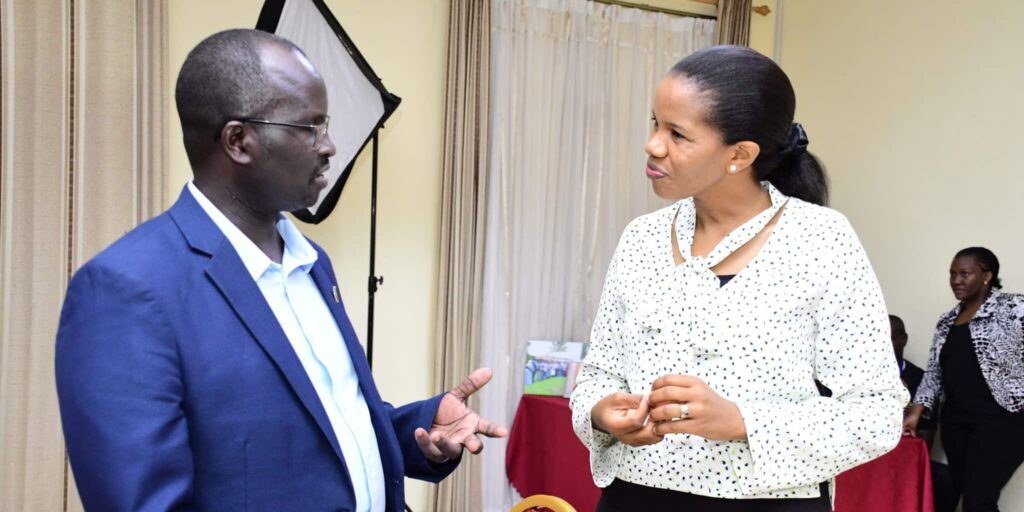
In June, the Holy Father made this argument to the Spanish Parliament in Madrid. He noted that every just society rests on the inviolable dignity of the human person, and “cannot be subordinated to shifting social consensus or the whims of the majority at any given moment.”
He was quoting Pope Benedict XVI’s address to the German Bundestag in 2011, delivered in a chamber that remembers too vividly what happens when a nation arrogates to itself the power to define who does or does not enjoy fundamental rights. Pope Leo then gave lawmakers a standard: that they ask whether “the will of the majority safeguards those goods that belong to all and respects that which no majority can legitimately violate.”
Christian faith proclaims the intrinsic dignity of the human person on the basis of Revelation, the Holy Father noted. However, he added, “human reason can recognize it as a requirement inscribed in the truth of man.” The defense of human life, he told them, “is neither a partisan issue nor a confessional interest: it is a goal of civilization.”
The Holy Father then explicitly applied this principle to the preborn, speaking to a Parliament in a nation that allows abortion on demand:
Every human life must be recognized and safeguarded from conception to its natural end, in every circumstance of its existence. When this certainty is obscured, the most vulnerable are the first victims, and the law loses its deepest meaning: to serve and protect every person. For this reason, the moral greatness of a nation is manifested, above all, in its capacity to accompany, protect and love those lives that are most fragile.
This is a Global Fight
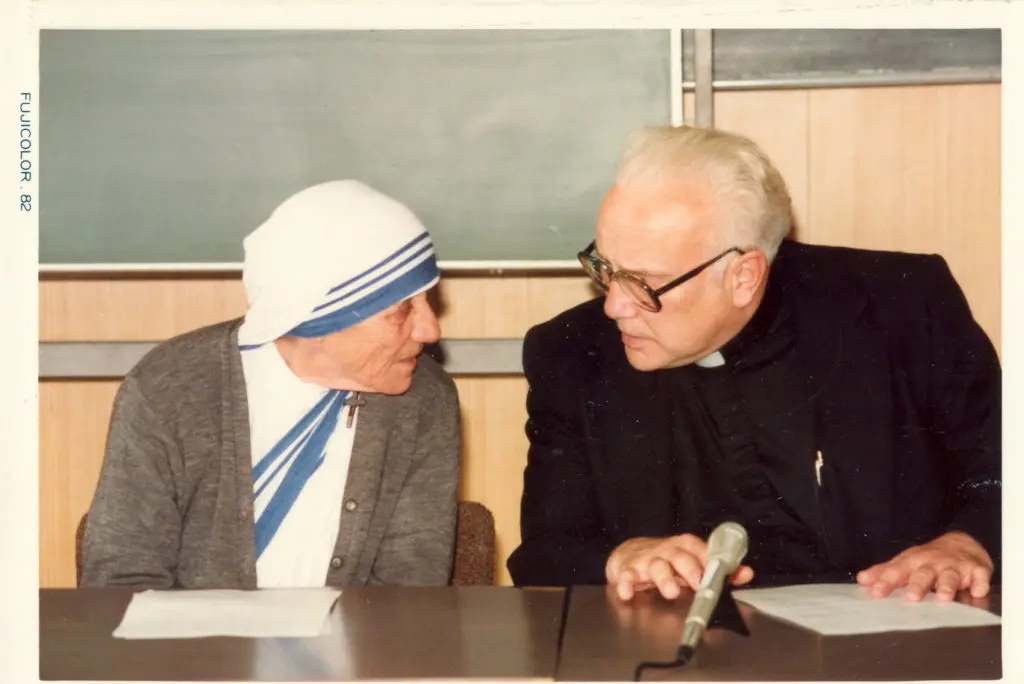
Fr. Paul Marx, OSB, founded Human Life International on the conviction that the pro-life fight is a global fight. Anti-life and family forces are globally unified, and globally funded. It is necessary, therefore, that we too have this global perspective, if only to know the tune that the devil is playing elsewhere, and may well soon be playing in our own backyard.
In the nearly one hundred countries I have visited on this work, I have seen what it costs a small nation to say no to a large, well-funded international lobby. Malta and Liechtenstein have said no and will be punished in any way that globalist forces can find. Pro-abortion forces will inevitably try again, with a new court case, a new referendum effort, a new legislative push. They are relentless. We must be equally relentless. Lives depend upon it.
Let us pray this week for the people of Malta and of Liechtenstein, who are being asked to trade their birthright for approval from what amounts to foreign invaders who have no respect for their pro-life and family culture. Let us pray for judges who read the law as it is written rather than as they are told it should read. Let us pray for legislators who know that their power has a boundary, and that they will have the courage to lose power rather than to cross it. And let us pray for our own countries, that we may find the conviction and courage to maintain whatever protections for the preborn we may have, or to restore those that have been torn down.
Human Life International
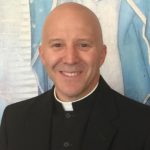
As president of Human Life International, Fr. Boquet is a leading expert on the international pro-life and family movement, having journeyed to nearly 90 countries on pro-life missions over the last decade. Father Boquet works with pro-life and family leaders in 116 counties that partner with HLI to proclaim and advance the Gospel of Life. Read his full bio here.
Euthanizing a Toddler: The Consequences of Devaluing Human Life