


Britain Says No to Assisted Suicide

“Even when not motivated by a selfish refusal to be burdened with the life of someone who is suffering, euthanasia must be called a false mercy, and indeed a disturbing ‘perversion’ of mercy. True ‘compassion’ leads to sharing another’s pain; it does not kill the person whose suffering we cannot bear.”
― Pope St. John Paul II, Evangelium Vitae, no. 66
On Friday afternoon, September 11, the British House of Commons voted 286 to 270 to reject a bill that would have legalized assisted suicide for the terminally ill in England and Wales.
Fifteen months earlier, the same House of Commons had passed the same bill.
The Terminally Ill Adults (End of Life) Bill, first introduced by Labour MP Kim Leadbeater, cleared its second reading in November 2024 by 55 votes and its third reading in June 2025 by 23. It was, we were told, unstoppable.
Then it went to the House of Lords, where peers tabled roughly 1,200 amendments, and it ran out of time in April. A second Labour MP, Lauren Edwards, reintroduced it in June, nearly word for word. On Sept. 11 it failed by 16.
Not one MP who had voted against the bill in 2025 switched to support it. Every change of mind went the other way.
The vote was close enough that Suella Braverman, delayed by a late train, ran across Green Park and made it into the No lobby with thirty seconds to spare.
Why Members of Parliament Switched Sides
What changed? Part of the answer is that MPs heard from a colleague who is dying.
Ashley Dalton is a Labour MP and a former health minister. She has stage four metastatic breast cancer. Under the bill before the House, she is exactly the kind of person it was written for. However, she rose to oppose it.
“A terrible death or an assisted death is not a choice,” she told the House. “It is a threat.” Palliative care in the UK, she said, “is excellent,” and “the idea that it is not possible to alleviate pain and discomfort is false.” “The answer is not to terrify people and their families. It is to sort out palliative care and social care first.”
The parliamentary sketch writer for The Times singled out her speech as pivotal.
Others had been changing their views for months. Janet Daby, the Labour MP for Lewisham East, voted for the bill in June 2025 and then began having nightmares about it. On Friday she told the House she could not shake a conversation with someone diagnosed with HIV/AIDS before effective treatment existed, who said that had assisted dying been available then, they would have taken it. It was not available. Today that person is stabilised on medication, in full-time work, and, she said, “no longer an advocate for assisted dying.”
Former Prime Minister Theresa May, now in the Lords, had succinctly explained what was wrong with the bill when the first version reached that chamber last September. She stated, “This is not an ‘assisted dying’ bill. It is an assisted suicide bill.” And “Suicide is wrong. This bill is wrong.”
The opposition crossed every party line. Conservative leader Kemi Badenoch and Liberal Democrat leader Ed Davey both voted no, as did senior Labour figures including Angela Rayner, Wes Streeting, and Shabana Mahmood. Reform’s Nigel Farage opposed the bill.
Prime Minister Andy Burnham abstained, saying he did not want to “unduly influence the debate as Prime Minister.” But in July he had told reporters that something needed to happen before any such debate, namely “the fixing of the funding of palliative care and social care,” and that it was “very challenging to introduce that wider debate in a context of people not receiving that care.”
The Impact of the Lords’ Opposition
The other part of the answer about why the bill failed is the House of Lords.
The Commons passed the bill, in the words of Dan Hitchens in First Things, on “expensive PR and vague-minded goodwill.” The Lords, whose members include former presidents of the royal medical colleges and former heads of the NHS, took the bill apart clause by clause over five months. What they found, Hitchens writes, was a bill with no real answer to important questions.
The Royal College of Psychiatrists told a Lords committee that the terminally ill are at high risk of depression, that where depression is treated “a wish to hasten death will often reduce,” and that the bill’s panel had no clear scope to identify such unmet need.
Experts on coercive control warned that abuse victims become “even more vulnerable” after a terminal diagnosis and that doctors are “not great” at spotting coercion.
Disability advocates warned that in countries that have legalized assisted suicide, feeling a burden is “pretty high up” the list of reasons people seek death, and the government’s own impact assessment conceded that disabled people “may feel subtle pressure” from a lack of services.
Warnings Against Legalization
Lord Falconer, the bill’s chief sponsor in the Lords, was asked in the Lords in January what would happen if a person chose death because they could not get good palliative care. His vague answer? “Of course, nobody wants the absence of palliative care to be the reason you apply for an assisted death, but we have to give everybody this choice on the basis of the way the world is for them.”
Bishop Philip Egan of Portsmouth pointed to the country that has already run this experiment. “In Canada already,” he said, “more than 5% of deaths are by lethal injection.” The Conservative MP Andrew Murrison made the same point on the floor of the House: “Canada has seen the most appalling mission creep, particularly into mental health.”
The Catholic bishops of England and Wales had been saying this from the start. Archbishop John Sherrington of Liverpool, the lead bishop for life issues, called the bill “flawed and dangerous” and said it “does not contain sufficient safeguards against coercion or protect vulnerable people.”
There was also the question of what impact the bill would have on health care facilities that do not want to help kill their patients. Archbishop Richard Moth warned that it “risks putting many wonderful hospices and care homes in the position of no longer being able to operate.”
After the vote, Archbishop Sherrington thanked “the many people from across society who made their voices heard,” naming “doctors, legal professionals, disability groups, other faith communities and those of no faith who stood up for the dignity and sanctity of every life.” And he added: “The true measure of a compassionate society is its willingness to support people through difficult circumstances rather than encouraging them to end their lives.”

Legalizing Assisted Suicide is NOT Progress
Sarah Wootton, chief executive of Dignity in Dying, the country’s main euthanasia lobby, blamed the “wrecking tactics of a handful of peers” for the failure of the bill, and insisted that “a Bill, supported by three quarters of the public, has been blocked.” Then came the line that advocates of the culture of death always resort to: “Law change is inevitable, a question of when, not if.”
Liz Kendall, the former cabinet minister, used the same words in The Observer two days after the vote. And Jess Phillips, a Labour MP who voted yes, had appealed to the same supposed inevitability before the first Commons vote in November 2024, when she told Times Radio: “The NHS is not in a fit enough state… but you cannot stop progress happening.”
The health service was not ready, she admitted. People would fall through the cracks. But the bill should pass anyway, because it was “progress,” and progress cannot be stopped.
Such is the same tired argument that advocates of the culture of death continually resort to when they run up against any opposition. “Inevitable,” “progress,” “history is on our side.”
Except, this time it was not.
One of the most interesting supporters of the bill is Dame Esther Rantzen, the beloved broadcaster who became the bill’s most famous champion after announcing in December 2023 that she had stage four lung cancer and had joined Dignitas. She expected to be dead within weeks. Instead, a new drug held the cancer back for more than two years.
In January 2025 Rantzen wrote, “When I thought I would drop off my perch in a matter of weeks, there seemed little point in ordering bulbs which would not flower for months. Happily, the new drug has postponed my perch-dropping for months, even years, so I’m surviving and this winter’s bulbs are in the soil.”
The drug has since stopped working. On the eve of Friday’s vote, she said she is now receiving end-of-life care. I pray for her, and I do not doubt her suffering. But the fact remains that under the bill she campaigned for, with its six-month prognosis and its two doctors, she could have been dead in early 2024 and would have missed the two springs she did not expect to see.
The Church Has Always Condemned Assisted Suicide
Thirty-one years ago, Pope St. John Paul II described the whole trajectory of the pro-assisted suicide movement in Evangelium Vitae.
He saw where the temptation came from. Modern medicine, he wrote, can sustain life “even in situations of extreme frailty,” and “in this context the temptation grows to have recourse to euthanasia, that is, to take control of death and bring it about before its time, ‘gently’ ending one’s own life or the life of others” (EV, no. 64).
He saw who would pay for it. Euthanasia, he warned, advances “above all in prosperous societies, marked by an attitude of excessive preoccupation with efficiency and which sees the growing number of elderly and disabled people as intolerable and too burdensome” (EV, no. 64). A society organized “almost exclusively on the basis of criteria of productive efficiency” will eventually decide that “a hopelessly impaired life no longer has any value.”
He also knew how it would be sold: as mercy. That is why he insisted that whatever its motives, euthanasia “must be called a false mercy, and indeed a disturbing ‘perversion’ of mercy” (EV, no. 66). The Catechism of the Catholic Church is just as explicit. Direct euthanasia, “whatever its motives and means,” is “morally unacceptable,” and “the error of judgment into which one can fall in good faith does not change the nature of this murderous act” (CCC, no. 2277).
When the Pope wrote those words, assisted suicide was a specter on the horizon. Today it is here. And everywhere it goes, it brings the dystopian abuses the Church has warned about with it.
Canada legalized “medical assistance in dying” in 2016 for the terminally ill and now offers it to the chronically ill, the disabled, and is looking at expanding it to the mentally ill. The Netherlands and Belgium euthanize children. None of the psychiatrists, disability advocates, or abuse experts who testified before the Lords cited Evangelium Vitae. They described, in secular terms, exactly what it predicted. As usual, the Church was well ahead of its time.
Assisted Suicide: Not Inevitable
Jonathon Van Maren, writing at The Bridgehead, put the lesson of Friday’s vote in one sentence: “Britain just proved that assisted suicide is not inevitable.”
It is not the only proof this year. In March, the Scottish Parliament voted down its own assisted suicide bill, 69 to 57. Last November, Slovenian voters rejected their government’s euthanasia law in a referendum. Each time, the advocates said the same thing afterward: this is only a delay, and the issue will not go away.
They may be right that it will not go away. But something has changed. There is now a decade of evidence from Canada, showing that what is supposed to be “rare” and in “extreme” cases rapidly becomes the default “solution” for all manner of “problems,” including bothersome cases of homeless or mentally ill patients, or those with chronic pain that is expensive to treat. The same evidence is present in spades from the Netherlands and Belgium.
The Sept. 11 vote in the UK shows that the world is, indeed, waking up.
In the meantime, the Church’s role remains the same. It is to defend the vulnerable, to serve the sick and dying, to fund and staff palliative and hospice centers, to comfort and accompany the suffering rather than kill them, and to keep saying, as Archbishop Sherrington said, that a compassionate society supports people through hard things rather than encouraging them to end their lives.
Thank God for the prophetic voice of the Church, standing for the truth in and out of season, even when her voice is rejected and scorned. In time, as we have just seen in the UK, the truth will prevail.
Human Life International
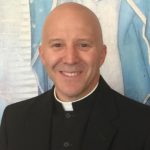
As president of Human Life International, Fr. Boquet is a leading expert on the international pro-life and family movement, having journeyed to nearly 90 countries on pro-life missions over the last decade. Father Boquet works with pro-life and family leaders in 116 counties that partner with HLI to proclaim and advance the Gospel of Life. Read his full bio here.
Pope Leo XIV Rejects Euthanasia as False Compassion