
The Price of Development: The Resistance of the Global South Against Ideological Colonialism
On paper, international cooperation serves to drive development. In harsh reality, it often becomes an instrument of extortion.
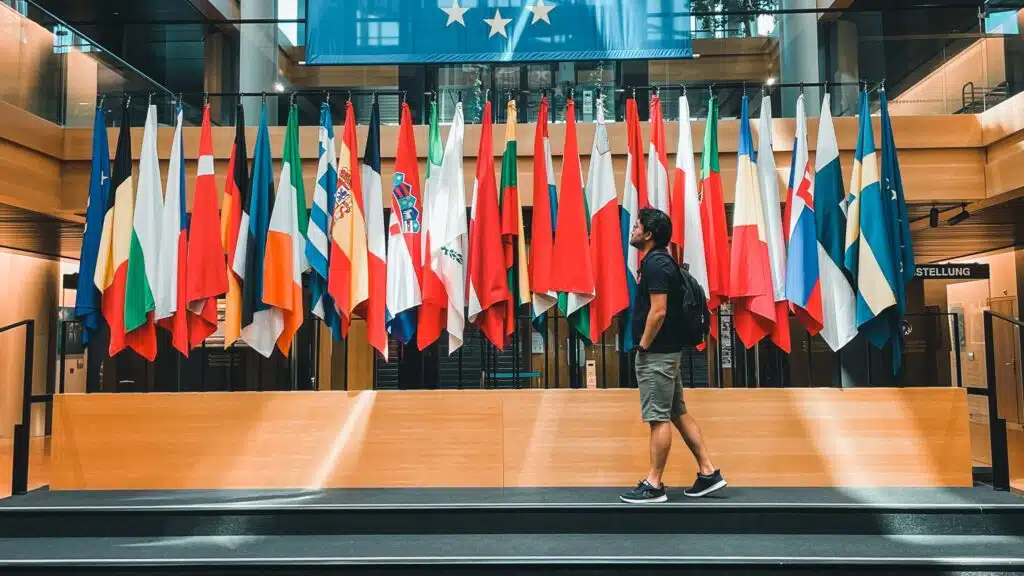
We are seeing this today, in these early weeks of October and heading toward the end of the year, as the diplomatic machinery steps on the gas. During these days, the committees and sessions of the OACPS-EU Joint Parliamentary Assembly are convening—the forum where European lawmakers and those from the 79 countries of Africa, the Caribbean, and the Pacific debate how to implement the controversial Samoa Agreement. It is at these tables, far from the cameras and under the promise of releasing millions in cooperation funds (such as those from the Global Europe instrument[1]), where the pressure is felt most forcefully. Under the guise of development aid, an attempt is being made to impose an agenda on these nations that strikes directly at the heart of life and the family.
We already know the tactic. In diplomatic forums, language is manipulated so that poison looks like medicine. The Samoa Agreement requires these countries to commit to “sexual and reproductive health and rights,” and to “comprehensive sexuality education,” as usual.
Let us not kid ourselves. Behind these euphemisms, the goal is single-minded: to force developing countries to change their laws, legalize abortion, and deconstruct the traditional family. In exchange for what? Market access and infrastructure programs. It is conditioning economic survival on the surrender of a people’s deepest values. We call this, in no uncertain terms, ideological colonization.
Faced with this machinery, the reaction of many nations in the so-called “Global South”[2] is worthy of admiration. Countries with deeply vulnerable economies are showing a moral fortitude that many first-world powers wish they had. They are resisting. They have made it clear, at the parliamentary debate tables, that their sovereignty and the dignity of their people are not on the market.
But they cannot fight this battle alone. The disparity in power, influence, and resources is disproportionate. And this is exactly where our mission comes in.
At Human Life International, thanks to the generous hearts that made the program for Intergovernmental Organizations and Diplomatic Missions possible, we do not just stand by and watch. Our mandate is to act, forge alliances, and back those diplomats and lawmakers who bravely stand up to neocolonialism. We place in their hands the legal rigor and the weight of our global network. We provide them with the technical arguments in every international committee, forum, and assembly—and soon we will also be in a position to assist them in forums like this one in October—so they can sit down to negotiate as equals, as it always should have been, without surrendering their inalienable right to dictate their own laws.
Defending life also means protecting the most vulnerable countries from the blackmail of power, ensuring that brave nations are never alone when they decide to affirm the dignity of all human life.
[1] Global Europe: This is the European Union’s main financial instrument for international cooperation and development (2021-2027). Through this fund, endowed with nearly 80 billion euros, the EU conditions the financing of projects in developing countries on compliance with political guidelines, human rights, and bilateral agreements such as the Samoa Agreement.
[2] Global South: A geopolitical and socioeconomic term used to refer to a group of nations—primarily located in Latin America, Africa, Asia, and Oceania—that share a history of colonialism, developing economic challenges, and the search for greater equity vis-à-vis traditional and industrialized powers (the “North”). It was coined by Carl Oglesby in the context of the Cold War, and since around the year 2000, it has been widely adopted by academics, the UN, the World Bank, and various NGOs. Strictly speaking, it is not solely a geographical term, as it includes countries like Mexico or India, which are located in the Northern Hemisphere.
Human Life International
Director of Intergovernmental Organizations and Diplomatic Missions
Human Life International
Luis Martínez is a Catholic lawyer, husband, and father of one daughter on earth and two children in Heaven, with nearly 30 years dedicated to promoting and defending human rights and the dignity of the person in both local and international arenas. Since 2014, Luis has been an active volunteer with Human Life International. In 2021, he was appointed as HLI’s first Director for the Mission to the Organization of American States (OAS), and in 2023, he assumed leadership of the newly established Directorate of Intergovernmental Organizations and Diplomatic Missions (IODM). From this position, he coordinates pro-life diplomatic engagement in multilateral organizations across continents, fostering collaboration in forums such as the OAS, the UN, the Summit of the Americas, ECLAC, and OACPS, among other regional and international bodies.

Socialism and the Family are Incompatible