An Epochal Change: Why the Family Matters in Passing on the Faith
“Our first catechists are our parents: those who first spoke to us and taught us to speak. Just as we learned our mother tongue, so too the proclamation of the faith cannot be delegated to someone else; it happens where we live, above all in our homes, around the family table.”
― Pope Leo XIV, quoted in Venite ad Me (no. 36)
Fr. Aimé Duval, a French Jesuit, has never forgotten the way his father prayed.
His father came home every evening worn out from working in the fields and driving the oxen. Yet after dinner, Fr. Duval recalled, “he would kneel down, resting his elbows on the seat of a chair, his forehead in his hands, without so much as a glance at his children gathered around him” (no. 35). His mother, too tired to kneel, sat with the youngest child in her arms, following every word of the prayers and keeping her eyes fixed on her children.
“Truly, the good Lord must be someone very great if my father kneels before him,” Fr. Duval remembers thinking, “but also someone very familiar if one can speak to him while wearing his work clothes.”
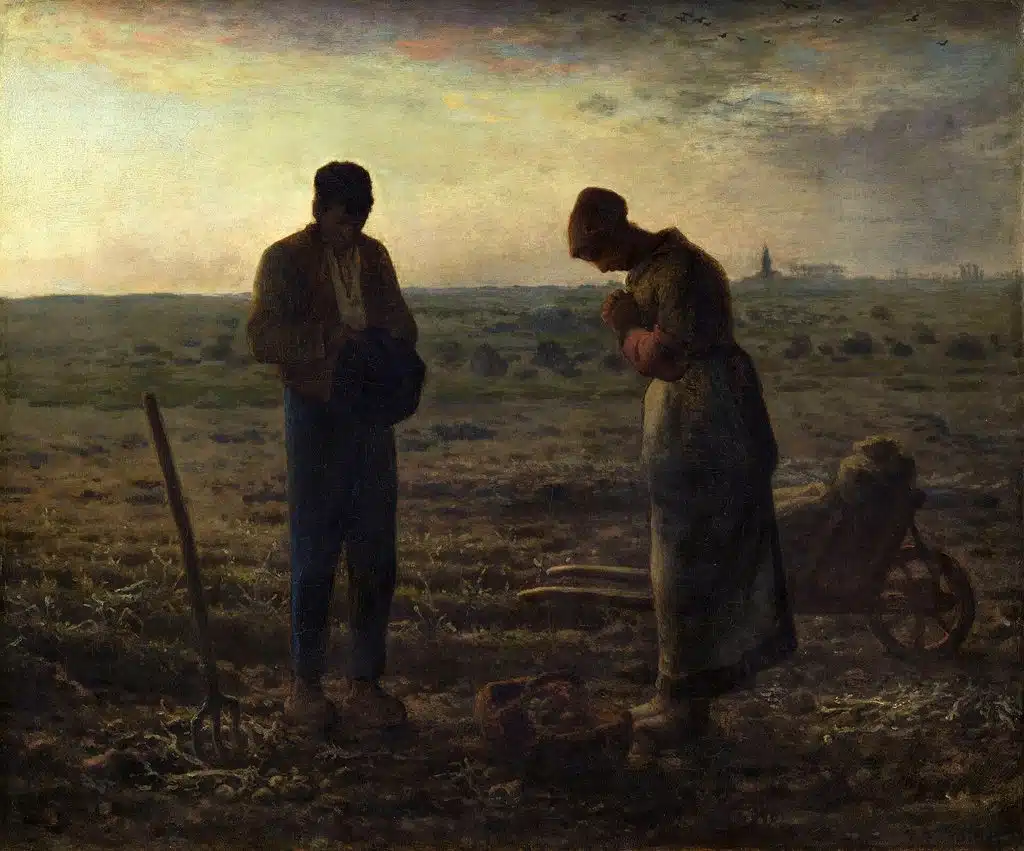
Years later, the priest summed it up this way: “My father’s hands and my mother’s lips—these are the things that taught me more about the good Lord than the catechism did.”
This moving account appears in a new document from the Vatican’s Dicastery for the Doctrine of the Faith. Titled Venite ad Me, or “Come to Me,” it was released on October 22, the memorial of Pope St. John Paul II, with the approval of Pope Leo XIV.
The document’s subject is the transmission of the faith. And it describes a crisis that pro-life and pro-family leaders have been raising the alarm about for decades: in much of the world, the family is under attack, and parents are no longer handing on the faith to their children.
Family: The Most Essential Place for the Transmission of Faith
The Dicastery leaves no doubt about where the faith is first received. “Among the settings in which the Church is called to share the light of Christ and let it shine,” it states, “the family is the first and most essential place for the transmission of the faith” (no. 31). Only after this, “as a second stage,” do catechesis and the wider parish community take up the work (no. 39).
The parish and the Catholic school build on what children receive at home. As the Catechism of the Catholic Church puts it, “Family catechesis precedes, accompanies, and enriches other forms of instruction in the faith” (no. 2226). Pope St. John Paul II emphasized much the same point in Familiaris Consortio: “the future of evangelization depends in great part on the Church of the home” (no. 52).
The Dicastery provides a very specific picture of what this looks like, in practice. Parents are that first “tabernacle” in which children “can glimpse all the beauty and strength of being disciples of the Lord Jesus.” Their witness consists of “‘simple, everyday gestures’: prayer as a couple, reading the Gospel, Sunday Mass, care for the poor, grace before meals, and setting up the Nativity scene at Christmas” (no. 37).
None of this requires a degree in theology or extraordinary personal piety or ascetical practices. It is within reach of any parent who believes, and who lets his children see that belief. It is less about some grand catechetical program in the home, or acts of showy piety, than it is about a quiet, gentle rhythm of life centered upon the sacred.
Above all, it is about creating a home life built upon a Christ-like love: generous, kind, self-sacrificial, so that there is no divide between religious practice and the relationships that constitute a family. Prayer flows into acts of love, and acts of love are reinforced through prayer.
What Happens When the Chain Breaks?
Unfortunately, as the Dicastery acknowledges, “this favorable situation is gradually disappearing” (no. 38). The document is frank about the reason. Especially in Europe, the United States, Canada, Australia, and New Zealand, it says, the problem is tied “to an advanced stage of secularization, which has led to a significant crisis in the practice of Christianity within the home.” It continues:
In truth, ever fewer parents are fulfilling their responsibility to introduce their children to the living light of the Gospel message. It is precisely from such family settings that most of the young men and women come who, despite having been part of Catholic parish communities, eventually enter adulthood in a state of substantial religious indifference (no. 48).
Many Catholic parents have seen this firsthand. The Dicastery notes the “large number of children and adolescents who drift away from the Church and the sacraments immediately after completing their Christian initiation or their course of formation in a Catholic school” (no. 79). For far too many young people, Confirmation has become graduation day.
Bishops around the world report versions of the same problem. In South Korea, where parents are preoccupied with academic and career success, “the responsibility for the catechesis of children and young people falls largely to grandparents” (no. 51).
Asia is much on my mind this week. As this column is being published, I am currently in transit to Taipei, where I am speaking at the International Conference on Family & Life, before traveling on to Indonesia. Please keep these missions in your prayers. Like so much of HLI’s work over nearly 55 years, it is about education and formation, the very concerns of Venite ad Me.
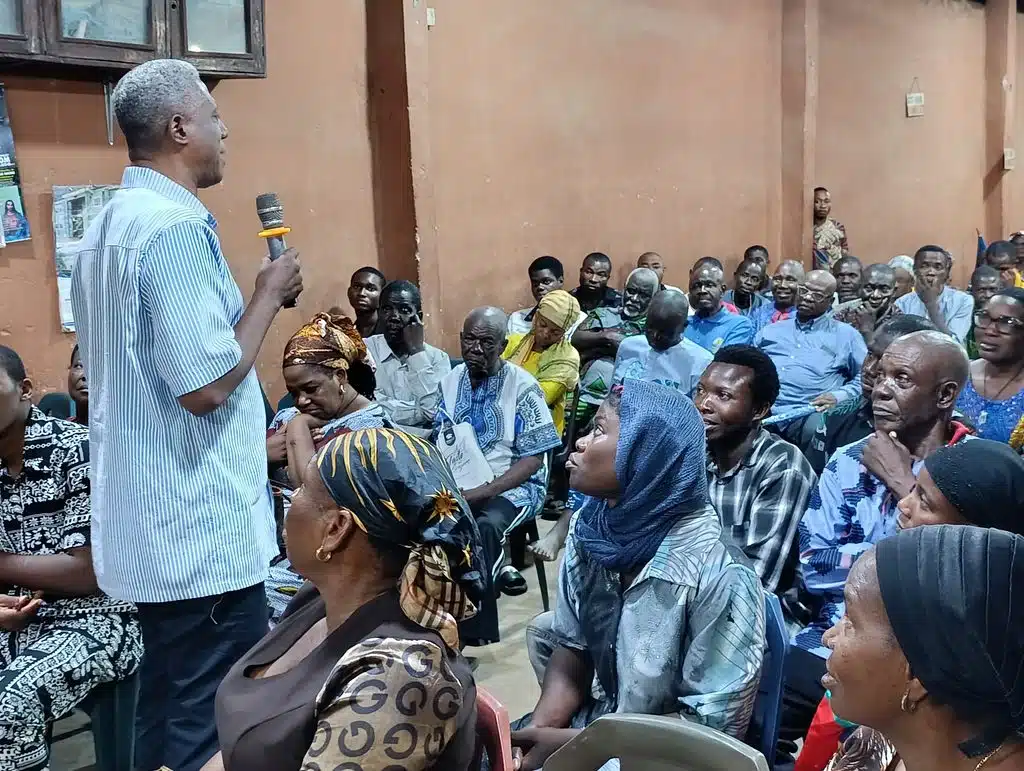
The document also names a problem that countless families are facing. Quoting Pope Leo’s encyclical Magnifica Humanitas, which I wrote about in June, it warns that digital media foster “a culture of immediacy and hyper-stimulation” (no. 59). Many families never take the time for silent prayer, because all the family members are glued to their phones or computers.
The Sovereign Self and the Culture of Death
Why have so many parents stopped passing on the faith? At the center of the cultural shift the document describes is what it calls the “sovereignty of the self”:
The prevailing trend of this unprecedented culture seems to consist in the exaltation of the “sovereignty of the self,” which asserts its autonomy and freedom to determine every aspect of its own existence, subjecting other human beings and the surrounding reality to its own needs. This trend reflects the spread of an increasingly pronounced individualism, which generates separation, division, envy, jealousy, domination, narcissism, and worship of the self (no. 56).
Venite ad Me does not go on to discuss the life issues. But any pro-life advocate will recognize this description at once. It describes, almost word for word, the mentality behind the culture of death.
Pope St. John Paul II identified the same root more than thirty years ago. The culture of death, he wrote in Evangelium Vitae, “betrays a completely individualistic concept of freedom, which ends up by becoming the freedom of ‘the strong’ against the weak who have no choice but to submit” (no. 19).
Consider how a self that claims the freedom “to determine every aspect of its own existence” treats those who get in its way. The child conceived at an inconvenient moment becomes an obstacle, to be prevented through contraception or eliminated through abortion. The sick and the elderly become burdens, and in places like Canada, they are increasingly “helped” to die. Under gender ideology, even one’s own body becomes raw material, to be remade at will.
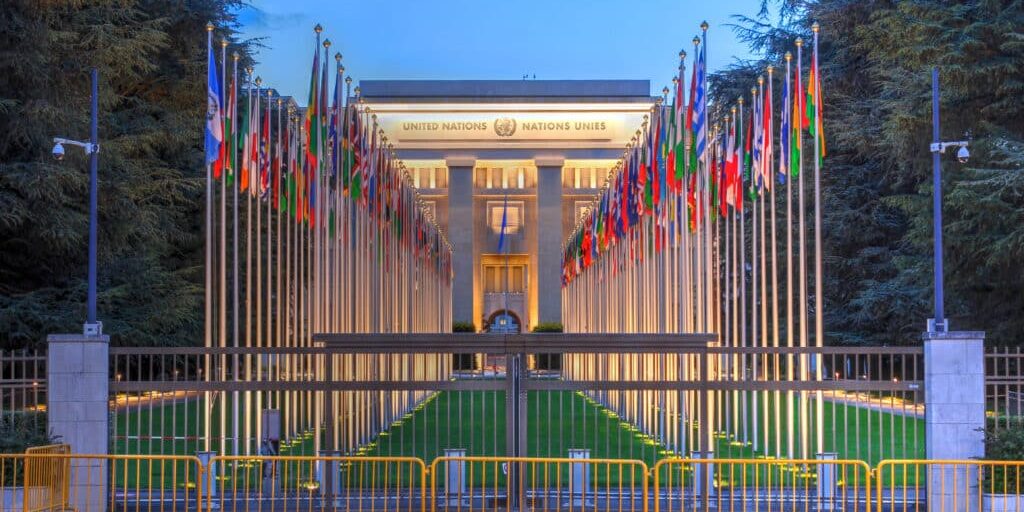
We have seen the same mindset at the United Nations in recent weeks. As Zenit reports, the UN Committee on the Rights of the Child has adopted a new general comment after a debate over draft language claiming a right to “effective access to safe abortion services for adolescent girls.” The Holy See objected that the draft was “effectively ‘adultifying’” children, “treating them as autonomous agents independent of their family.”
The sovereign self is now being projected onto children, with their parents pushed aside. It is the same question I raised a few weeks ago in my column on socialism and the family: does the formation of children belong to their parents, or to “the community”?
Holiness Makes Belief Credible
The document’s answer to a culture of self-worship is holiness. “[N]othing makes the Church more credible in proclaiming and transmitting the faith,” says the Dicastery, “than the holiness of her members” (no. 95). It then quotes Pope Francis: “Are you a parent or grandparent? Be holy by patiently teaching the little ones how to follow Jesus.”
Few couples show what this looks like better than St. Gianna Beretta Molla and her husband, Pietro Molla. St. Gianna, a pediatrician, married Pietro in 1955. “I want to learn to pray as you do, dear Pietro,” she wrote to him in 1958.
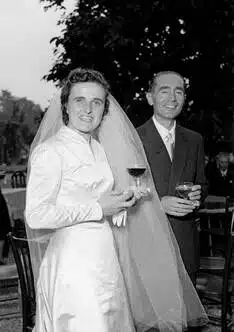
While expecting their fourth child, St. Gianna was found to have a fibroma in her uterus. She insisted that her baby’s life come first. “If you must decide between me and the child, do not hesitate: choose the child—I insist on it. Save the baby,” she said. Gianna Emanuela was born in April 1962, and her mother died a week later, at the age of 39. Pope St. John Paul II canonized Blessed Gianna Beretta Molla in 2004.
Pietro’s witness is less often remembered (I hope this, however, is beginning to change). He was left with four children to raise and never remarried. Gianna Emanuela, MD, who lived with her father for 48 years, has said that she “could see his example with my own eyes.”
Parents also need priests and bishops who preach the kerygma, the proclamation that, in the words of Evangelii Gaudium quoted by the Dicastery, “Jesus Christ loves you; he gave his life to save you” (no. 75). And a proclamation of salvation must tell people what they are saved from. The Dicastery itself laments the “weakening of the sense of personal and collective sin” that secularization has produced (no. 57).
Parents: Light the Candle at Home
Venite ad Me closes with the image of the Easter Vigil, when the flame of the paschal candle passes from one candle to the next until the whole church is lit (nos. 140-141).
For most of us, that flame was first passed on at home.
So, I ask the parents reading this column: When did your children last see you pray? If the answer is “not recently,” begin tonight. Kneel down after dinner, as Fr. Duval’s father did, and pray a decade of the rosary together. Sing some of the countless beautiful hymns that the Church has given us. I especially recommend the various Marian antiphons, especially the Salve Regina. Then bring your children with you to Mass on Sunday and talk with them afterward about what they heard and understood.
Your children may forget many of the words. But like Fr. Duval, they will remember your example.
And let us ask the Blessed Virgin Mary, whom the Dicastery calls “our teacher of the transmission of the faith” (no. 144), to intercede for every family striving to pass on the light of Christ to the next generation.
Human Life International
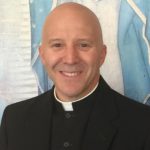
As president of Human Life International, Fr. Boquet is a leading expert on the international pro-life and family movement, having journeyed to nearly 90 countries on pro-life missions over the last decade. Father Boquet works with pro-life and family leaders in 116 counties that partner with HLI to proclaim and advance the Gospel of Life. Read his full bio here.