
Euthanizing a Toddler: The Consequences of Devaluing Human Life
Late last year, in a hospital in the Netherlands, a doctor ended the life of a child who was almost two years old.
The child had been born at 26 weeks with severe brain damage. He was diagnosed with cerebral palsy, a severe visual impairment, and a form of infant epilepsy that brought on seizures several times a day.
The child’s parents asked their doctor to kill their child, which he ultimately agreed to do. Through an IV line, he gave the child increasing doses of midazolam, a sedative, and morphine, until the child was asleep. He then administered propofol and thiopental, drugs used to induce a coma. The child, in the words of the official record, “reached a state of very deep sedation, and died.”
The doctor reported the euthanasia to the government committee that reviews such cases. A little over a month ago, on September 9, the committee published its judgment: the doctor “had acted with due care.”
It was the first time a child between the ages of one and twelve had been euthanized in the Netherlands. Until February of 2024, it would have been a crime. That month, a new government regulation took effect allowing doctors to end the lives of children in this age group at their parents’ request. Now the first case has been approved, and if history is any indication, it will not be the last.
Government Committee Reviews the Case
In reading the judgment, several things stand out. The first is that the child was indeed gravely ill. The judgment describes a child who suffered painful seizures, slept little, and struggled to breathe and to swallow.
This must have been a severe trial for the parents. There is no denying that. Any parent of a child with special medical needs knows that the degree of 24/7 care can take a significant physical and psychological toll.
And yet, it should hardly need to be said, none of this justifies killing a young child (or anyone, for that matter). Indeed, several other findings in the government committee’s report highlight just how morally reprehensible this act of infanticide was.
In the first place, the child was not dying. The doctors believed there was a “very high probability of the child dying at a very young age due to complications.” However, while he was severely disabled and in distress, he was not actively dying.
Second, other doctors did not agree with the doctor who administered the euthanasia. The first independent specialists the treating physician consulted told him that the child “was not continuously suffering unbearably,” and that “there were still reasonable alternatives,” including palliative care and other seizure medications.
The doctor tried the new medication and stopped it because of side effects. He then went to another doctor outside his region, who agreed with him that nothing remained but to end the child’s life. (This is the same pattern of “doctor shopping” that crops up everywhere that euthanasia is legalized under “strict guidelines”.)
Third, there was no protocol for killing a young child. The committee notes that the doctor “had sought a protocol for carrying out the procedure with due medical care, but to no avail.” The regulation itself, the committee admits, “does not yet contain due care criteria” for children between one and twelve. The sequence of drugs I described above was the doctor’s own improvisation. The committee approved it anyway.
In the United States, just a few weeks ago, we witnessed a botched execution that produced macabre results. While I do not want to confuse the two issues, my point is simply that if the doctor had “botched” the job similarly, it could simply have produced additional suffering in the young child.
The Slippery Slope of Euthanasia
The Dutch legalized euthanasia for adults in 2002. Within three years, doctors at a hospital in Groningen had drawn up a protocol for ending the lives of newborns with severe disabilities. The Dutch pediatric society adopted it in 2005. As insane as it sounds, children twelve and over could already request euthanasia under the 2002 law, with their parents’ consent until the age of sixteen.
There was only one gap left: children between one and twelve, and in 2024 the government closed it.
As the eligibility for euthanasia has increased, so has the number of euthanasia deaths. According to the regional review committees’ latest annual report, 10,341 people were euthanized in the Netherlands last year, six percent of all deaths in the country. They included 499 people with dementia and 174 whose suffering was “psychiatric”, i.e. those with mental illness. Another 475 were euthanized for an “accumulation of age-related conditions.” As far as I can tell, that means they were old.
Lord David Alton, the British pro-life peer, did not mince words. “You start with a little euthanasia, and this is where it inevitably leads,” he said. “Make it legal and it simply becomes another ‘option.’”
Peter Singer Was Right About One Thing
When it comes to the question of infanticide, one name inevitably comes up: Peter Singer, the Princeton philosopher who openly advocates for the practice. As he wrote in his book, Practical Ethics:
At present parents can choose to keep or destroy their disabled offspring only if the disability happens to be detected during pregnancy. There is no logical basis for restricting parents’ choice to these particular disabilities. If disabled newborn infants were not regarded as having a right to life until, say, a week or a month after birth it would allow parents, in consultation with their doctors, to choose on the basis of far greater knowledge of the infant’s condition than is possible before birth.
I will grant Singer this much: he is right that the line at birth is arbitrary. If we can legally kill a preborn child moments before birth, why should we not be able to do it after birth? The child is the same; the only difference is its location.
Where I disagree with Singer is in the lesson that he draws from this fact. Rather than arbitrarily moving the line to a week, or a month, after birth, instead we should recognize and have reverence for the inherent dignity of every human life from the moment of conception until natural death. And we must assert that it is never licit to kill a preborn child: always, all the time, with no exceptions.
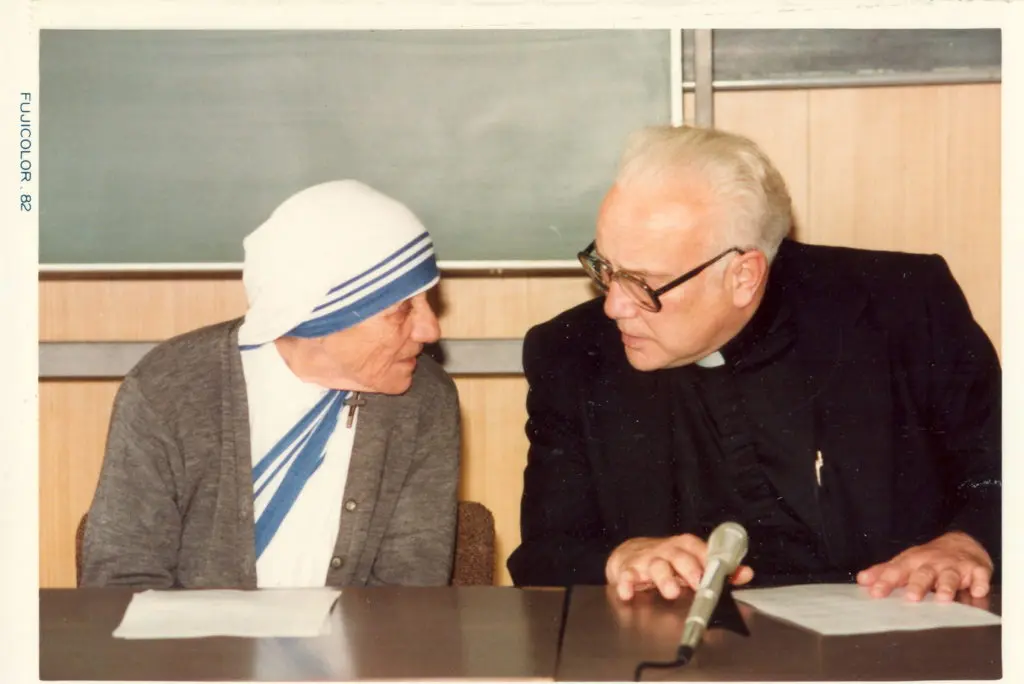
HLI’s founder, Fr. Paul Marx, OSB, saw this half a century ago. “The logic of abortion demands euthanasia,” he wrote in 1975. “Ethically, abortion and euthanasia are inseparable twins.”
One sentence in the Dutch judgment shows what Fr. Marx meant. The treating doctor, it says, “was of the opinion that the child was suffering unbearably without prospect of improvement, and still would have been, even if the epilepsy had been brought under control.”
Even with the seizures controlled, in the doctor’s judgment the child was still better off dead, because of what the child was: dependent on others for everything. The committee agreed. The suffering counted as unbearable because of “the very limited possibilities for the child to have positive life experiences.”
In other words, the parents, the doctor, and the committee made a judgment about whether a particular kind of human life is worth living.
The Church has always rejected the idea behind it, i.e. that the value of a person is found in what he can do. As the Catechism of the Catholic Church puts it:
Whatever its motives and means, direct euthanasia consists in putting an end to the lives of handicapped, sick, or dying persons. It is morally unacceptable. Thus, an act or omission which, of itself or by intention, causes death in order to eliminate suffering constitutes a murder gravely contrary to the dignity of the human person and to the respect due to the living God, his Creator (CCC, no. 2277).
What Mercy Actually Looks Like
Cardinal Willem Eijk, the president of the Dutch bishops’ conference, was a physician before he became a priest. He wrote his doctoral thesis on euthanasia in the Netherlands.
“The word ‘merciful’ is often used nowadays to justify ethically questionable actions,” the Cardinal told Crux in the wake of the killing. “However, is it merciful to violate the fundamental dignity of the human person by ending their life?”
“What is truly merciful,” he went on, “is providing adequate care, in this case in the form of palliative care. If standard forms of palliative care prove insufficient to reduce suffering to a tolerable level, palliative sedation may offer a solution.”
Cardinal Eijk said this shows that “many people in Western society prefer death to a life with disabilities.”
“Today’s culture is less able to cope with suffering and disabilities. This is most clearly reflected in the tendency of most people today to regard perfect appearance as the ideal. Even when there are hardly any visible imperfections, many still resort to plastic surgery, even though there is actually no need for it,” he said.
The committee’s judgment also records that the parents were offered sedation for the child and refused it. The reason is that what was offered was “continuous sedation,” which, they argued, “would eventually lead to the child’s death due to lack of fluids and food.”
It is important to note that the Church’s teaching on end-of-life care is sophisticated on this question. The Catechism holds as licit “the use of painkillers to alleviate the sufferings of the dying, even at the risk of shortening their days,” so long as “death is not willed as either an end or a means.” However, it also says that “even if death is thought imminent, the ordinary care owed to a sick person cannot be legitimately interrupted” (CCC, no. 2279; Ethical and Religious Directives for Catholic Health Care Services, no. 63). Food and water are ordinary care, owed to the sick even by artificial means for as long as they nourish, as I explained in my column on Terri Schiavo last year. Sedation whose purpose is that the child will die of thirst is euthanasia by other means. But that is not what would have happened in this case.
As the Cardinal explained, “If, despite the use of painkillers and other measures to reduce distressing symptoms to a tolerable level, it may be permissible to suppress consciousness by administering sedatives, to the extent necessary to make the symptoms tolerable. It may sometimes be necessary to suppress consciousness completely,” he said.
“In that case, the patient will no longer take in food or water, so that they will die after some time. Death is not, however, the intention of the act, but a side effect, which can be justified because no other means of treating the symptoms are available,” Cardinal Eijk explained.
Related: End of Life Decisions: A Catholic Guide for Patients and Families
Death Leads to Death
In recent weeks I have also written about Britain’s House of Commons voting down an assisted suicide bill, about Brigitte Stegemann, the 83-year-old Ontario grandmother whose family says she died by lethal injection with her hands clasped in prayer, and about Pope Leo XIV at Lourdes, where he told the sick that “what is legal is not necessarily moral.”
As I have often said in this column, death leads to death. In the Netherlands it began with dying adults who asked for it. It now includes people with dementia, the mentally ill, the very old, newborns, and a two-year-old.
The culture of death, Pope St. John Paul II wrote in Evangelium Vitae, “is advancing above all in prosperous societies, marked by an attitude of excessive preoccupation with efficiency and which sees the growing number of elderly and disabled people as intolerable and too burdensome” (no. 64).
Pope Leo XIV said much the same thing at UNESCO in Paris last month. “Our dignity is not destroyed by illness or suffering,” he said, “nor is it dependent upon our abilities. Rather, it calls for loving care at every stage of life.”
The Dutch, like every Western nation, have spent fifty years contracepting and aborting the next generation, and now have more and more elderly and disabled people to care for and fewer and fewer young people to care for them. A toddler is not elderly. But the same logic that views the old as burdensome and dispensable inevitably turns its attention on all those who are similarly vulnerable.
In response, the Church continually reaffirms that every human being, however small, sick, or disabled, is made in the image and likeness of God. Indeed, one might argue that the value of the sick child in this case comes just as much from the demand that he makes upon us, the well, to respond to his suffering with love, compassion and long-suffering.
This is the message of Christ in the Gospels: that, in some special way, the poor, the downtrodden, the oppressed are special in the sight of God. Suffering, if responded to appropriately, humanizes us. By using death as a solution, we escape hardship but also escape that which has the potential to soften our hearts and enlarge our souls.
Human Life International
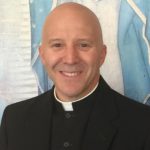
As president of Human Life International, Fr. Boquet is a leading expert on the international pro-life and family movement, having journeyed to nearly 90 countries on pro-life missions over the last decade. Father Boquet works with pro-life and family leaders in 116 counties that partner with HLI to proclaim and advance the Gospel of Life. Read his full bio here.
Socialism and the Family are Incompatible