

When you date someone, choose somebody who cares about your soul and will help you attain heaven. This should be the primary lesson that parents teach their children when it comes to Christian sex education. It teaches them that they have value and that they are worthy of someone who cares about more than just their bodies.
As parents, we are responsible for imparting these values at home. The Catechism of the Catholic Church affirms this and explains that parents are the most important educators of their children. In fact, it states that parents “bear witness to this responsibility first by creating a home where tenderness, forgiveness, respect, fidelity, and disinterested service are the rule.”
Not only must parents teach their children about our faith and how to live out their values, but we must teach them how to live virtuous lives, and that includes chastity.
Sex education is often a difficult subject for parents to approach with their children. We may feel awkward, uncomfortable, and sometimes even inadequate. But if we don’t educate our children about how their bodies work and teach respect for their sexuality, the world will instruct them, and we know that this type of education will not be based on morality, on values, or on selflessness. It will be based on doing what “feels good,” with a heavy focus on contraception.
Problems with Traditional Sex Ed
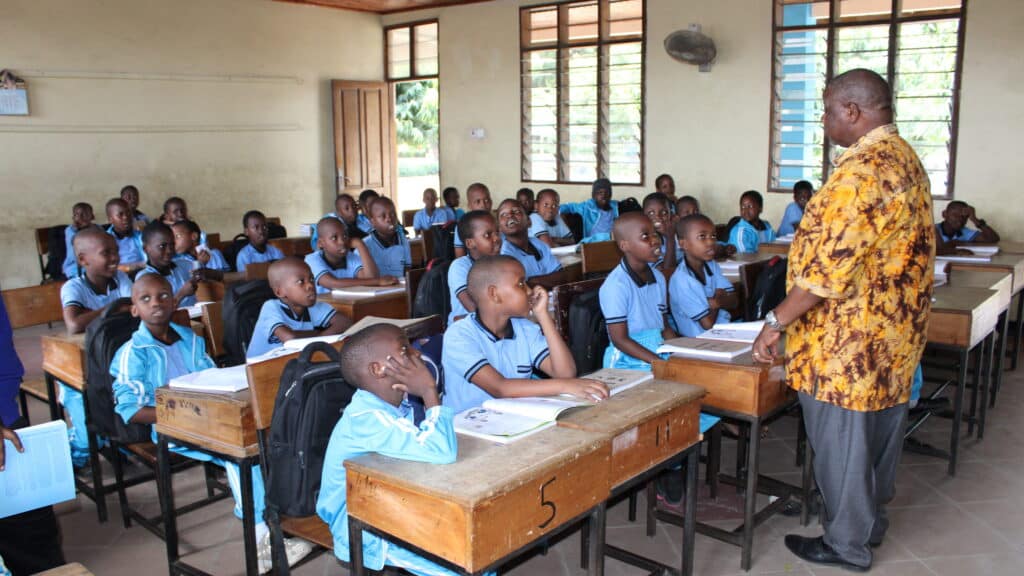
Secular sex ed programs may teach basic biology, but they are also often based on the assumption that kids will engage in the sexual act outside of marriage, so they are laden with discussions about contraception and even sexual positions and instructions for how to perform them. They strip the innocence of our children and turn them into sexual beings who seek pleasure rather than love, who seek sexual gratification rather than self-mastery, and who fail to see the value in themselves and in others. In short, these programs teach the opposite of authentic love – a self-giving love that seeks to put the other person first – and impart that it’s okay to use someone’s body, as long as both people consent.
As parents, we should want better for our children, and if we hope to give them the foundation they need to find someone worthy of them and someone who respects them, we must teach these values clearly and with confidence.
But we get it; this is hard to do, especially if we ourselves don’t quite understand why chastity is important, how a married couple can benefit from past chaste behaviors, and why this is healthy for a marriage. But studies have shown that sexual promiscuity before or outside of the marriage is harmful.
A Focus on the Family article explains that “science is now showing us what our grandmothers and pastors knew all along. Having sex with someone who is not our spouse can have a real, measurable and harmful impact upon later relationships.” It goes on to explain, “When we give ourselves away – and sex is a full giving of ourselves away physically, emotionally, spiritually – to someone outside the commitment and protection of marriage, it breaks down an important part of us, making our future relationships more unhealthy and difficult to sustain.”
So where do parents begin? What should we say and how should we teach these values? We can start with lessons from St. John Paul II.
Theology of the Body
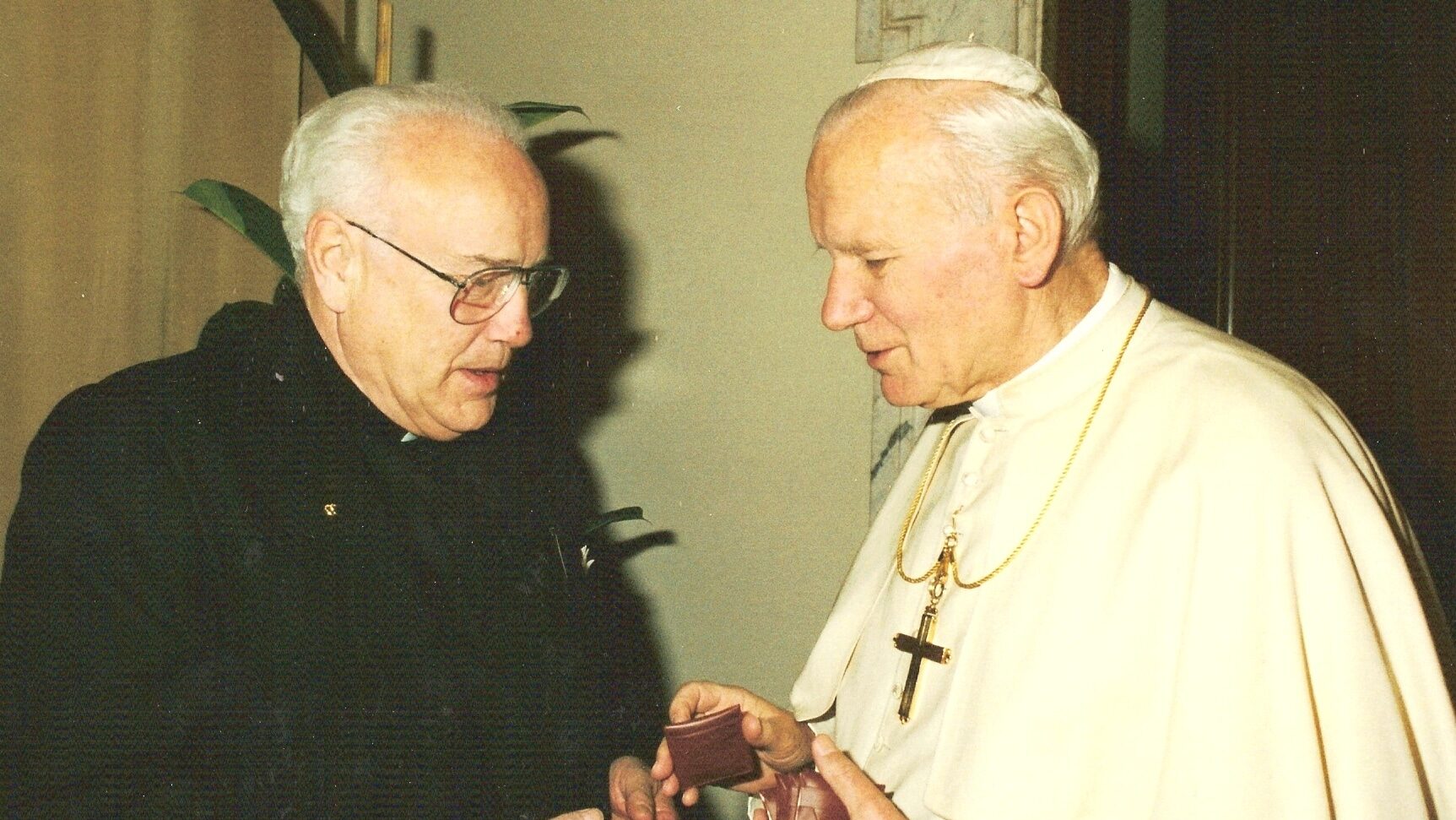
St. John Paul II’s Theology of the Body—a series of talks given during the pontiff’s Wednesday general audiences from September 5, 1979, through November 28, 1984—teaches the beauty of human sexuality. During our Holy Father’s Wednesday talks, he spoke about the unique and holy love between a man and a woman, about marriage as a sacrament, about celibacy, about contraception, about the difference between love and lust, the gift of the human body, and much more.
This volume of work illustrates how we are not only to see ourselves but how we are to see other people, especially our future spouses. It’s challenging teaching, but it’s integral to our understanding of the human person, of God’s love, and of the reason why we were put on earth.
As the Baltimore Catechism states, we were put here on earth to “know, love, and serve God.” But we cannot properly serve Him if we don’t know how to love. So parents must teach their children these important concepts in an age-appropriate way throughout their lives.
Starting when kids are just toddlers, parents can affirm their dignity as a little boy or little girl. We can teach them the beauty of their bodies and how men and women (Mommy and Daddy) complement each other. As they grow, we intentionally teach age-appropriate facts about their growing bodies and how they are to interact with the opposite sex.
Once they are old enough, we can teach about sexuality, and we must start frank conversations about threats to life. We can explain the evils of abortion, the tragedy of creating babies via IVF and leaving “extras” frozen or washing them down the drain. And we must explain that the Church teaches that contraception is wrong because it removes the procreative aspect from the marital act, thus causing each spouse to hold back a part of themselves. This contradicts the true meaning of a self-giving love, for you cannot give yourself fully when using contraception. Additionally, when contraception fails, it often leads to abortion.
Because these are often difficult conversations to have, parents need guidance. A program called LoveEd offers that guidance.
Related: In Vitro Fertilization: Ethical Issues | HLI
LoveEd
Created by Coleen Kelly Mast, a family life and chastity expert who has an extensive history of teaching chastity to adolescents, who has authored books about abstinence, and who has debated Planned Parenthood, SIECUS Sex Ed for Social Change, and the ACLU, LoveEd teaches “our children the basic truths very clearly, gradually, and sensitively at the proper times of life.”
In a phone interview, Coleen shared that her bishop saw the value in what she was teaching her students and saw the impact of her leadership and wisdom. Her students could speak articulately about chastity, understood the sanctity of life, and spoke courageously in public venues. So, he asked her to write a book. LoveEd is the result of that conversation and of her decades of experience. Now, in partnership with the John Paul II Renewal Center, Coleen is hoping to make more parishes and families aware of this incredible program.
LoveEd is not merely a Christian sex education program. As the parent guide explains, it is a “program designed to help parents teach both the theology and science of human sexuality in the context of God’s plan for love and life.”
Rooted in Catholic teaching and in accurate science, this sex ed program imparts valuable lessons to pre-adolescents and adolescents about the beauty of their bodies, the value of all people, and God’s love for all of us. And it gives them the courage they need to live these values.
Components of LoveEd
LoveEd contains five books (a parent guide, a book for each sex ages 9-11, and a book for each sex ages 12-14) and a series of videos for each age. Boys and girls have their own workbooks geared toward their own developing bodies.
The parent element of LoveEd entails a two-hour seminar and a book filled with advice and guidance about how to talk to kids from the time they are small. It offers stories and real-life scenarios so that parents who may feel nervous about broaching the topic of sexuality can feel more at ease. It takes parents through the different stages of life and explains how they can lay the foundation for a respect for life and for Christian love from the time their children are toddlers. In the initial meeting, the parents watch a video and talk with other parents. They become acquainted and connected with the program, with the parish, and with other parents, and they learn valuable tools to use as they talk to their kids about their bodies and about chastity. Coleen explained that parents walk out of the meeting with a renewed confidence.
The beauty of the program is that, when parents first meet, they learn the reason for the Church’s teachings on chastity and love within a marriage. They also learn how they can uphold these values in their own lives. They then have the opportunity to ask questions and discuss the topics presented with other parents.
After that, the same-sex parent and the child come together weekly for a six-week period, during which they watch videos specific to that age range and discuss the topics presented. These meetings become a terrific bonding experience for the parent and the child, and they allow the two to discuss sensitive topics in a positive and non-awkward environment with the guidance of a facilitator.
The parent and child will then complete portions of the workbook each week at home and return to the parish or other setting for further discussion. After the six weeks, most parishes end their programs, but the books offer further stories and reflections that the child and parents should read at home together to continue the conversation.
Self-giving love
LoveEd is not just a chastity or sex ed program. It helps a parent lay the foundation children need to learn the truths of our faith in an age-appropriate way. This is crucial today, as kids are inundated with social media posts about sexuality and sexual behaviors, and many are having sex at very young ages.
What they really need to learn is the meaning of authentic love and the reason we are here. They need to understand that their purpose in life is not to have as many sexual conquests as possible but to live a virtuous life with the intention of getting to heaven someday.
As parents, when we have these difficult conversations and teach these values, we build our relationship with our children and form strong bonds that will help them go out into the world in search of a future spouse who will respect and value them, not simply want to use them. They will see that they are gifts to be cherished and that we are meant to give ourselves in love for the good of the other person.
LoveEd teaches these values, along with the complementarity of a man and a woman, that men and women are great gifts to each other, and the difference between empty love and self-giving love. It instills confidence in kids so they can courageously walk away from the dangers of the world. It also instills confidence in parents, as it teaches them to lead by example, even if in the past they may not have conformed to the Church’s teachings.
Coleen explained that, while LoveEd uses teachings from Theology of the Body, other Christian denominations can and have successfully used it and “used it well” because the truths taught throughout are universal truths about love and dignity that all parents should want to impart to their children.
Accolades for LoveEd
Coleen shared that she has received incredibly positive feedback from the parents and kids who have graduated from this program and that “the parents who do it are just blown away.” Many parents have said that they wished they had had this program when they were younger.
The LoveEd website shares accolades as well, with parents saying the books are “very age-appropriate,” “clear, concise and interactive,” “a beautiful experience,” and a “fantastic way to start the conversation of puberty & what it means for your child in a non-embarrassing way.”
Coleen also shared a story of a young girl who was resistant when she and her mother began the program. The girl began the meeting sullen and angry. After watching the first video and going to another room to talk one-on-one with her mom, she became a little more interested. Her body language softened. After watching the second video and going again for the one-on-one talk, she and her mother returned walking arm in arm.
This is the impact Coleen sees regularly on families, and this is why parents play such a huge role in their children’s formation.
Final Thoughts
Today, parents face significant challenges when teaching children about sexuality. Our culture wants kids to think that they can and should do what they want or what makes them happy. Some even go so far as to say things like “God would want you to be happy.” But while that is partially true, it’s not the whole truth. God wants us to be holy and faithful. And He doesn’t want us to be used or to use others, as He knows this can never lead to lasting happiness.
God desires that we see the beauty in ourselves, and yes, even in our sexuality. But sexuality can only be truly beautiful if both parties give of themselves entirely, never holding back or using each other for pleasure.
This behavior is not love. It is lust.
This is the truth that we as parents should feel comfortable teaching our children, and it’s why Christian sex education is so crucial for parents to teach at home. When we teach these truths and our children grow to really understand them, they will be more likely to listen and contemplate when we say these words to them: When you date someone, choose somebody who cares about your soul and will help you attain heaven. And they will be more likely to go forth and do so.
Related Content


























Susan Ciancio has a BA in psychology and a BA in sociology from the University of Notre Dame, with an MA in liberal studies from Indiana University. Since 2003, she has worked as a professional editor and writer, editing both fiction and nonfiction books, magazine articles, blogs, educational lessons, professional materials, and website content. Fourteen of those years have been in the pro-life sector. Currently Susan writes weekly for HLI, edits for American Life League, and is the editor of its Celebrate Life Magazine. She also serves as executive editor for the Culture of Life Studies Program, an educational nonprofit program for k-12 students.
What a great informational article! Yes, talking to our kids about sex ed is very uncomfortable. You gave valuable resources and helpful tips to help parents talk to their kids. Thank you also for the link to LoveEd. All parents should read this!!